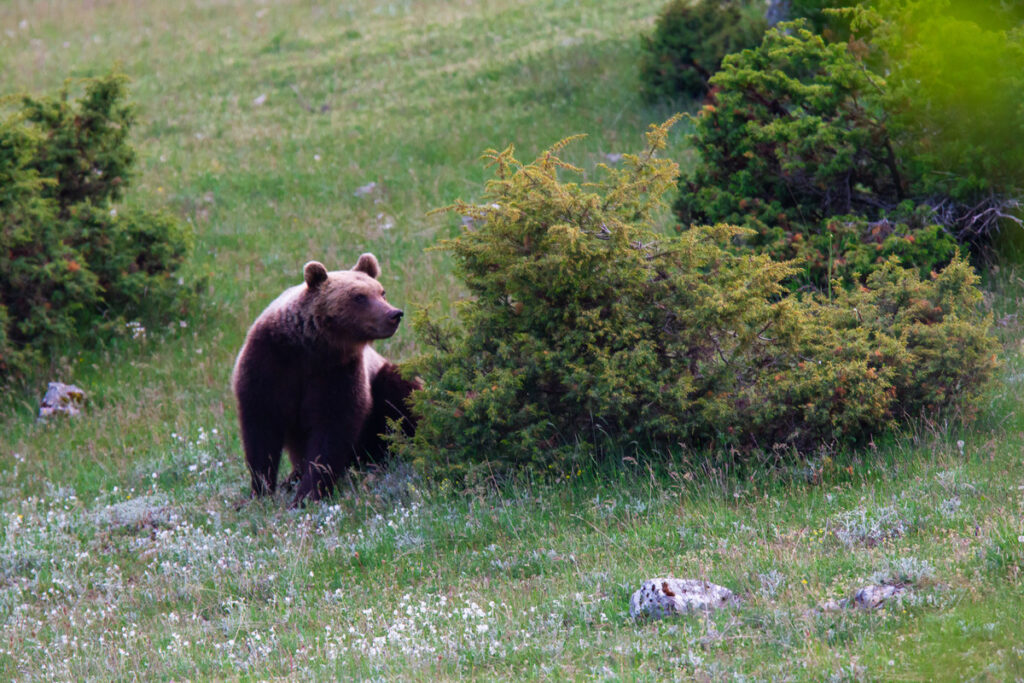

Five years of practical action and community engagement have strengthened human-bear coexistence across the Central Apennine mountains of Italy. By helping local communities and Marsican bears share space and thrive together, this work has strengthened the foundations for the continued comeback of this iconic subspecies.

Giving bears room to roam

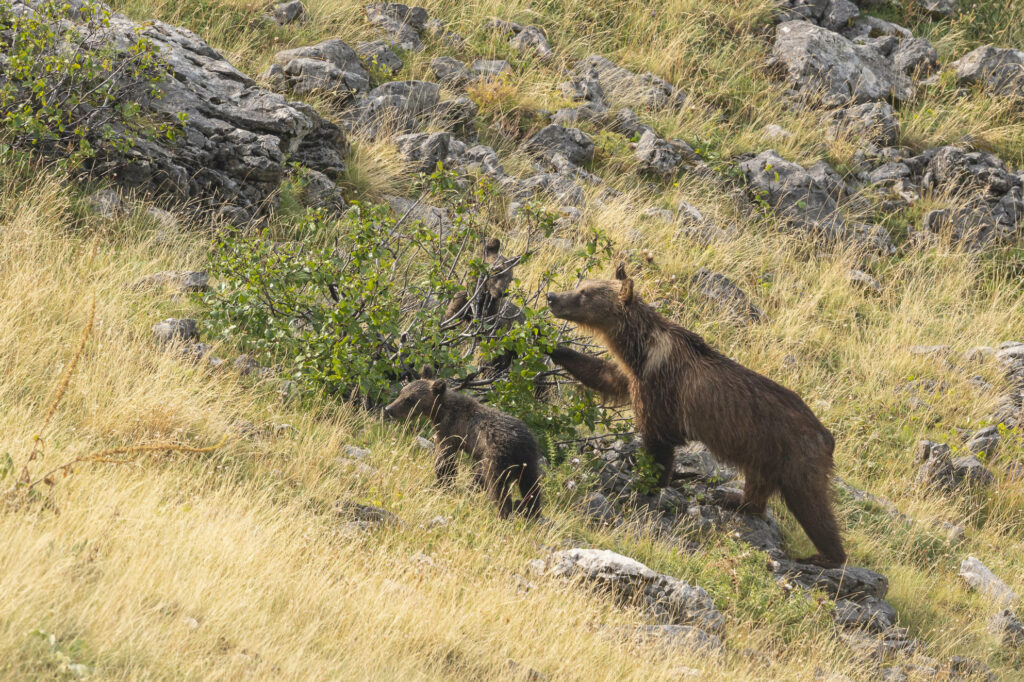
For Italy’s captivating yet critically endangered Marsican brown bears to continue their recovery, they need room to expand. Their historic stronghold in the Abruzzo, Lazio and Molise National Park remains vital, but protected areas alone cannot secure the recovery of the species. The future of the population also depends on bears moving into surrounding areas of the Central Apennines — landscapes where villages, farms, roads and other human infrastructure are part of everyday life.
Over the last five years, the LIFE Bear-Smart Corridors initiative, coordinated by Rewilding Europe, has established 16 “Bear-Smart Communities” across the Central Apennines rewilding landscape, with a further two developed in Greece. Working with these communities, the Rewilding Apennines team and other partners – the Abruzzo, Lazio and Molise National Park, Monte Genzana Alto Gizio Nature Reserve, Salviamo l’Orso, Sirente Velino Regional Park and Gran Sasso and Monti della Laga National Park — have combined damage prevention, habitat improvement, monitoring, education, community engagement and enterprise support to help bears and local people share space and thrive together, while enabling bears to move more safely between suitable areas.
A landmark census published earlier this year underlined the importance of this work. The first population estimate covering the Marsican bear’s entire known range put the current population at around 81 animals. While there is limited room for further population growth in the historic core, bear density remains far lower in peripheral areas, with well-connected areas supporting more bears than similarly distant but poorly connected landscapes.

Making shared landscapes safer
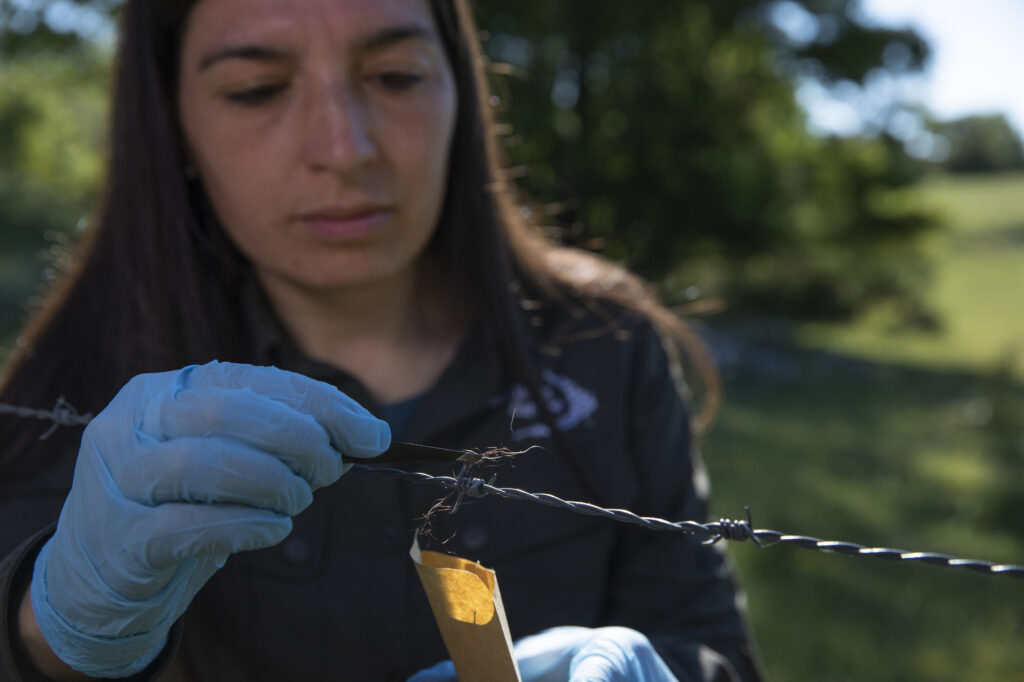
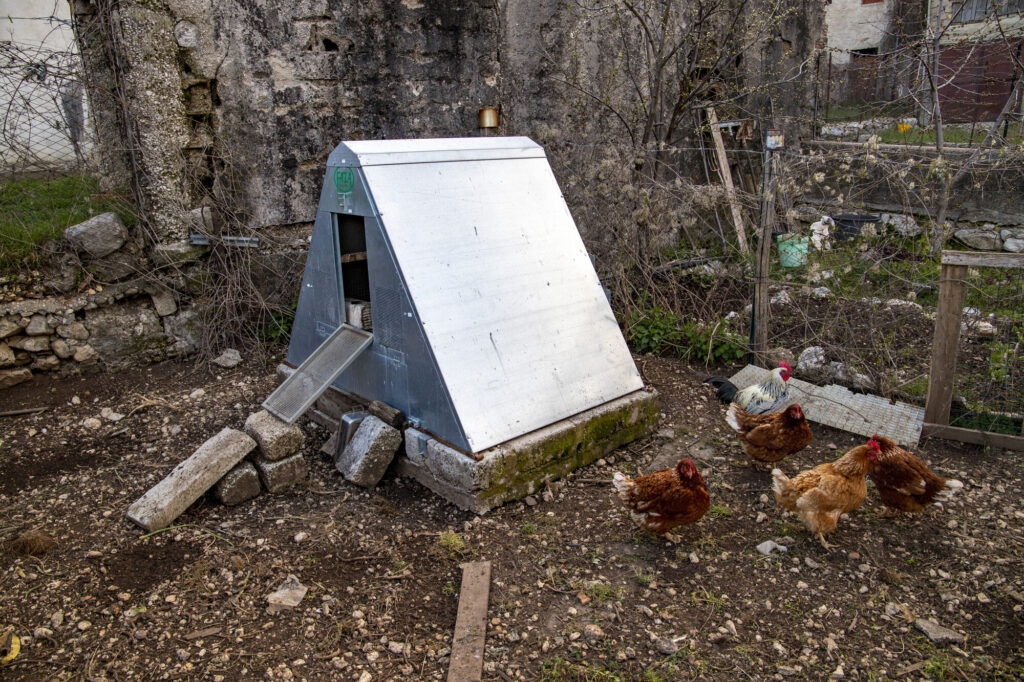
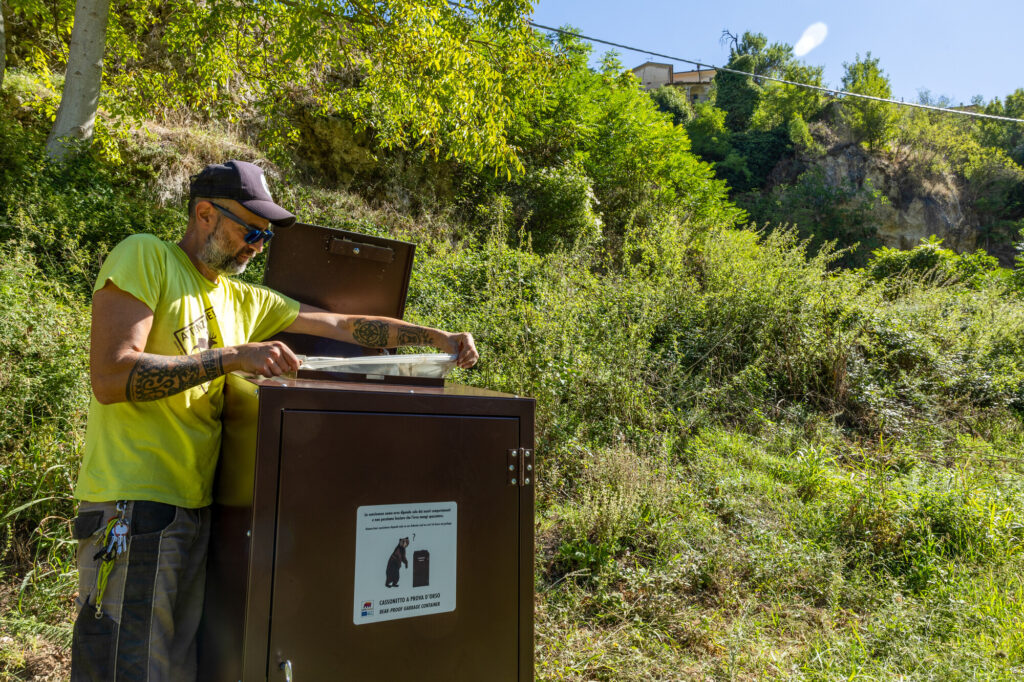
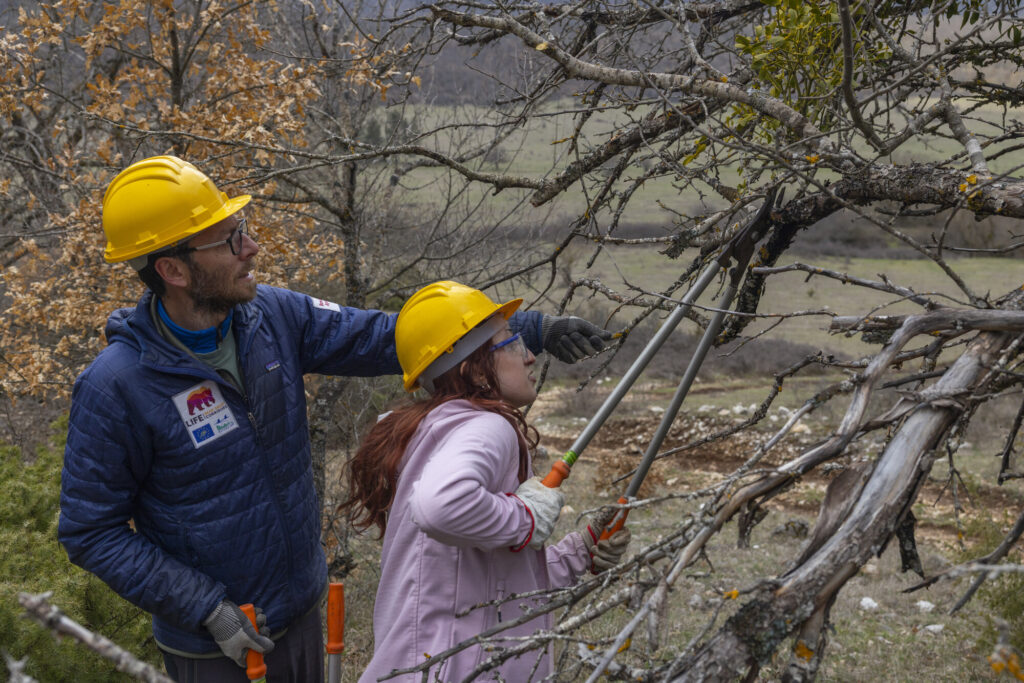
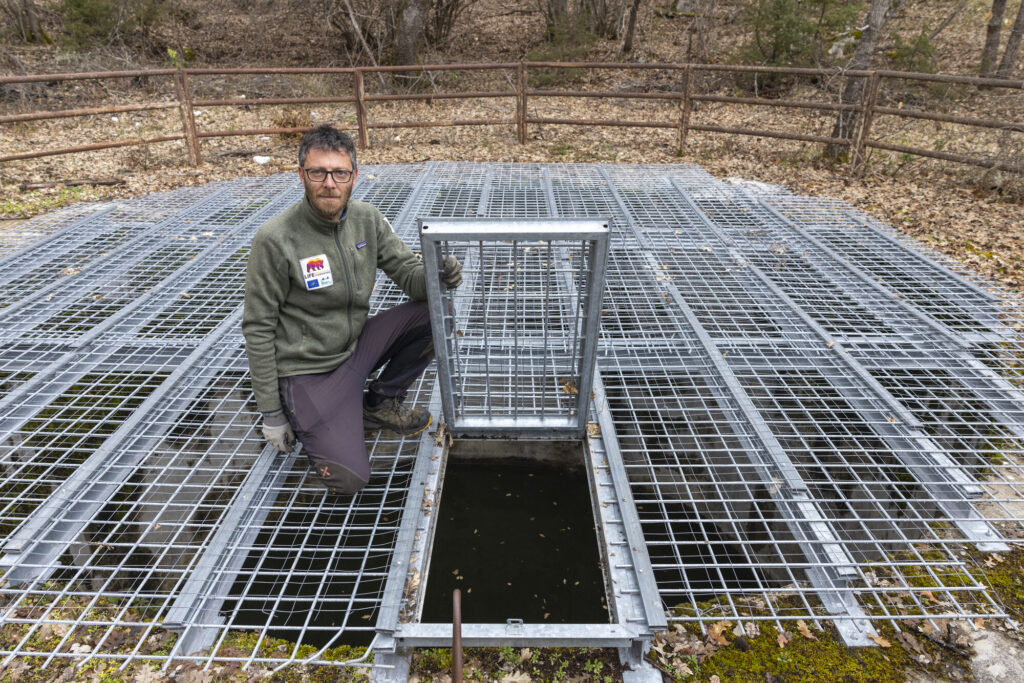
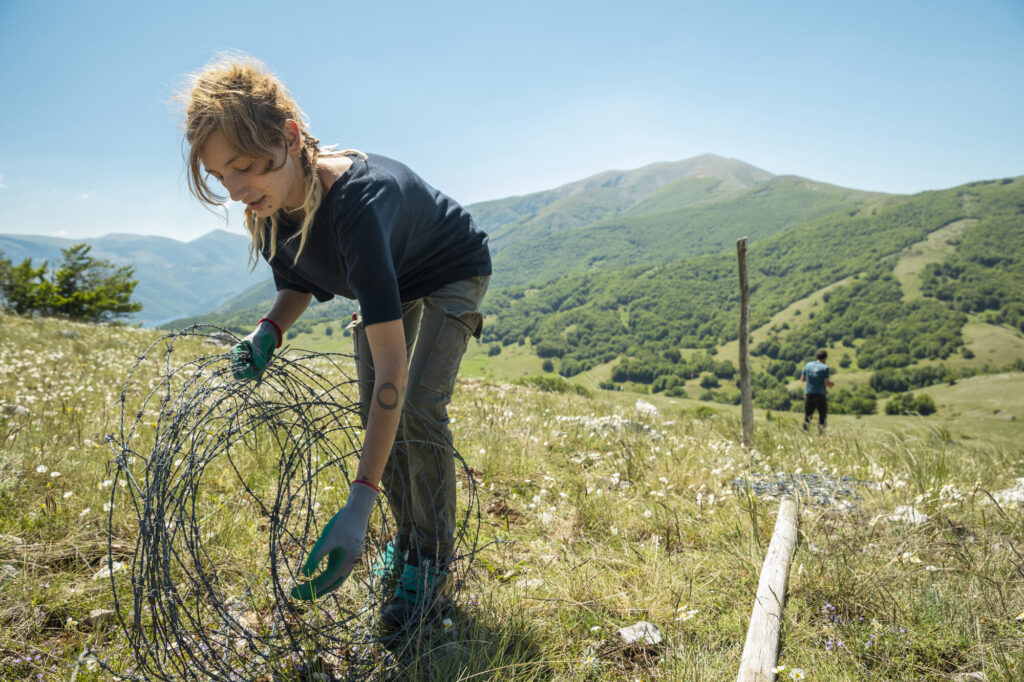
The scale of this work is documented in the recently published LIFE Bear-Smart Corridors Layman’s Report. Across Italy and Greece, around 630 preventive electric fences have been installed, while in the Central Apennines 76 bear-proof chicken coops and reinforced doors and 110 bear-proof waste bins have been introduced. More than 650 abandoned mountain fruit trees have been pruned to increase the availability of natural food, while dangerous water wells and other structures have been made safer and over 80 kilometres of obsolete barbed wire removed.
Together, these measures make it easier for bears to move through the landscape, while reducing the risk of potential challenges when they encounter people and settlements. Bear-Smart Community committees, events and workshops complement this practical work by involving local people directly in coexistence, building awareness and strengthening connections with bears across generations.
“These elements are all essential,” says Rewilding Apennines Team Leader Mario Cipollone. “We still have a lot of work to do, but the end result of this holistic approach is that we have a more secure landscape for bears today, compared to when we started.”
From conservation spectators to participants
One of the most significant changes in the rewilding landscape has been the growing role of local communities in shaping how people and bears live alongside each other. Dedicated committees have enabled residents, municipalities, businesses and other stakeholders to help identify challenges and develop locally tailored coexistence plans, rather than having solutions imposed from outside. Mario Cipollone says people who previously left bear conservation largely to NGOs and protected area authorities are now helping to plan and deliver actions themselves.
Rewilding Apennines Communications Manager Angela Tavone sees this growing sense of ownership as a particularly important legacy. Community members increasingly tell their own stories to journalists and visitors, while artworks and other visible reminders of bears enhance local identity and build pride in wild nature.
“We are continually working towards an increased sense of belonging and responsibility,” she says. “For us, coexistence is not some kind of finite goal, but a long-term social process that continually adapts to new challenges and opportunities.”
“FOR US, COEXISTENCE IS NOT SOME KIND OF FINITE GOAL, BUT A LONG-TERM SOCIAL PROCESS THAT CONTINUALLY ADAPTS TO NEW CHALLENGES AND OPPORTUNITIES.”
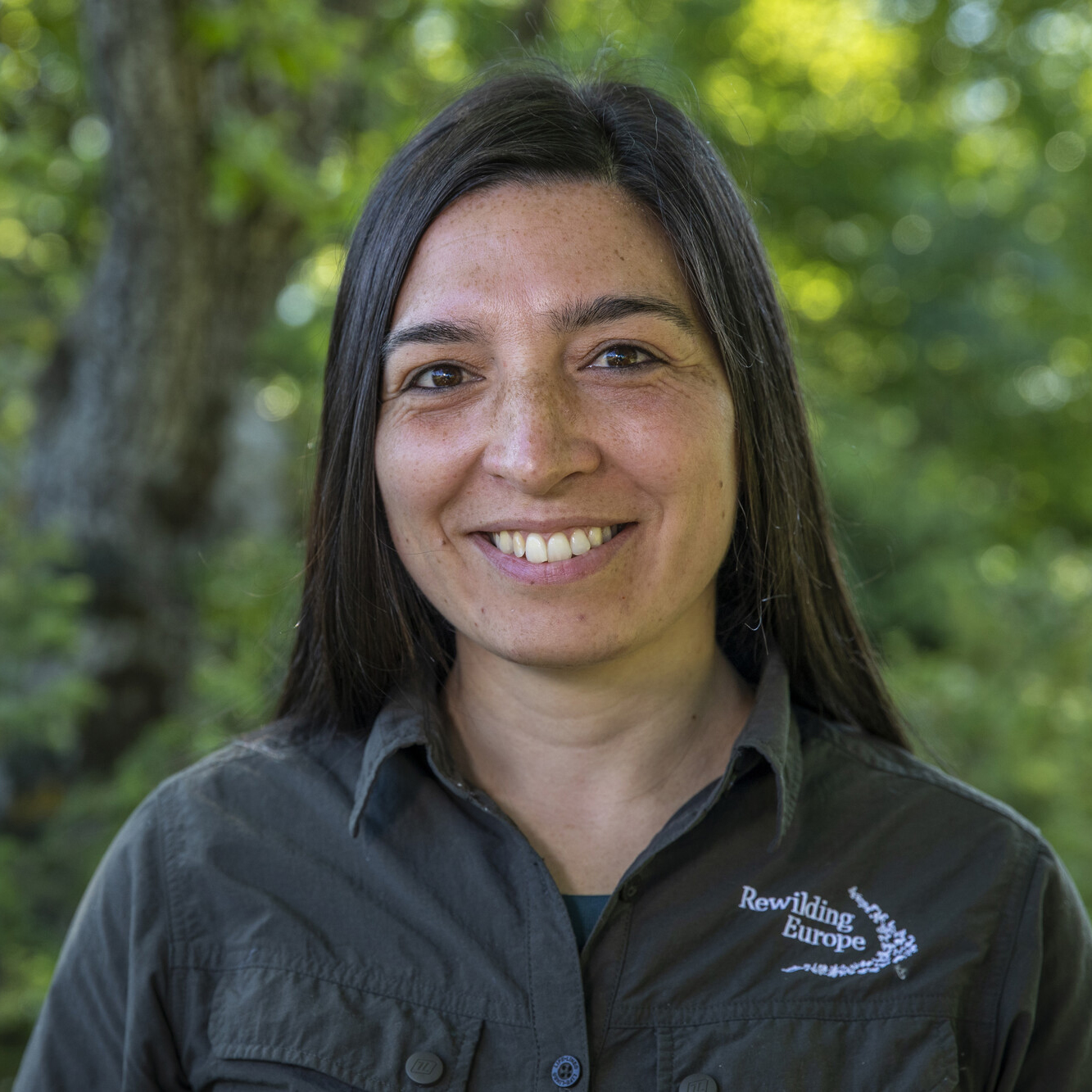 Angela Tavone
Coexistence creates opportunities
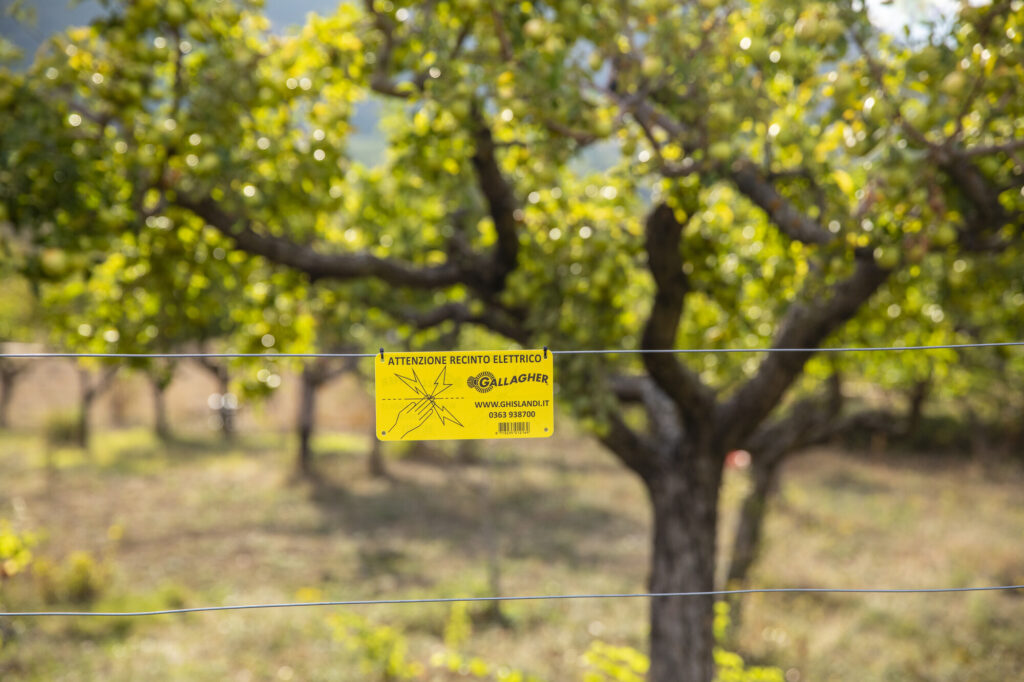
The LIFE Bear-Smart Corridors initiative has also sought to demonstrate how living alongside bears can support local livelihoods. An Enterprise Network for Coexistence now brings together 37 businesses and entrepreneurs across the Central Apennines, encompassing hospitality, food production, guiding, outdoor experiences and rural tourism.
Tavone highlights local cider producer and network member Marco de Matteis as a good example. His apple orchard is protected from bears by electric fencing, while his Ortona dei Marsi-based Melagusto business has become increasingly involved in the coexistence network. Marco regularly shares his experience with visitors to his orchard, while Tavone says his involvement in coexistence work has grown — as well as his income — as his relationship with Rewilding Apennines team and the nature on his doorstep has developed.
Pettorano sul Gizio, which hosts the Genzana Bear-Smart Community, illustrates how community-led coexistence can become part of a town’s identity and economy. International coverage of its comprehensive approach to coexistence has significantly raised the town’s profile, which Tavone believes has contributed to an increase in foreign visitors. Across the Central Apennines, bears can support growth in nature-based tourism, creating opportunities for guides, accommodation providers, food producers and other local businesses.

Sharing insight, scaling up
These results and lessons took centre stage in Pescasseroli from September 20 to 25, when the town — which is located in the heart of the Abruzzo, Lazio and Molise National Park and the Central Apennines rewilding landscape — hosted the 29th international conference of the International Association for Bear Research and Management (IBA), alongside the final LIFE Bear-Smart Corridors conference.
Around 400 people from 41 countries attended the wider gathering. A full day was dedicated to coexistence, while three field excursions enabled delegates to visit Bear-Smart Communities and meet the people involved. The LIFE initiative’s final conference attracted 150 participants, including representatives from 10 Bear-Smart Communities, with discussions ranging from tourism and education to politics and human-wildlife coexistence. Just before the final conference, Paths We Share, a documentary telling the story of the initiative and the people involved, was released online.
For Annette Mertens, one of Rewilding Europe’s Rewilding Landscape Managers, the governance developed around the Bear-Smart Communities in the Central Apennines has been particularly impressive.
“Some of those attending the Pescasseroli event expressed a keen interest in adopting a similar approach in other landscapes and for other wildlife species,” she says. “It would be great to see the hard work of the Rewilding Apennines team and partners replicated in other places in Europe and beyond.”
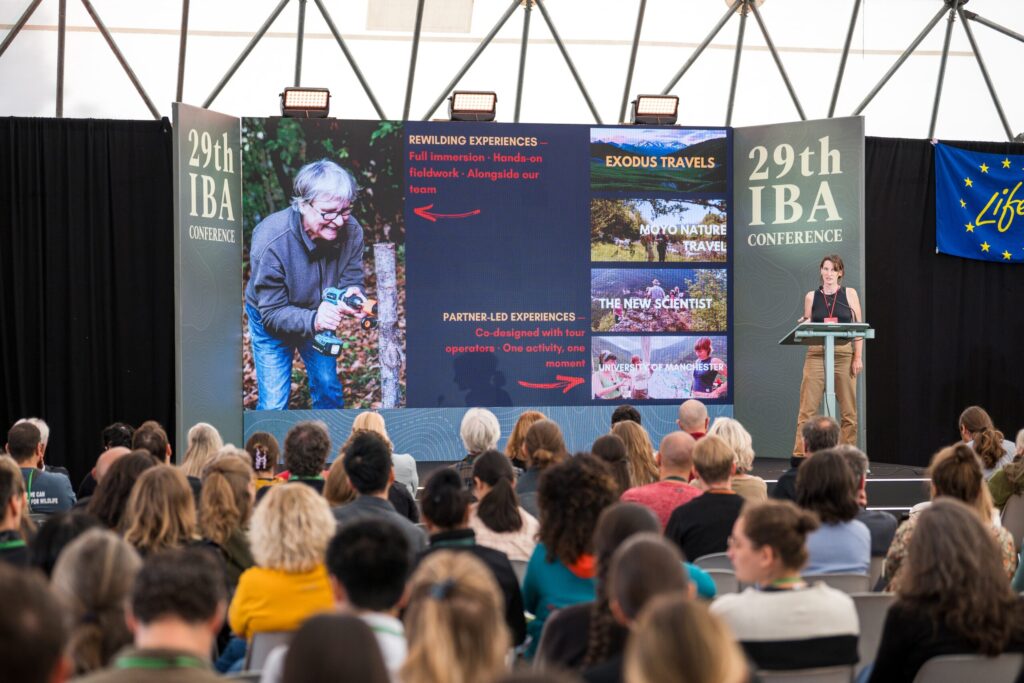
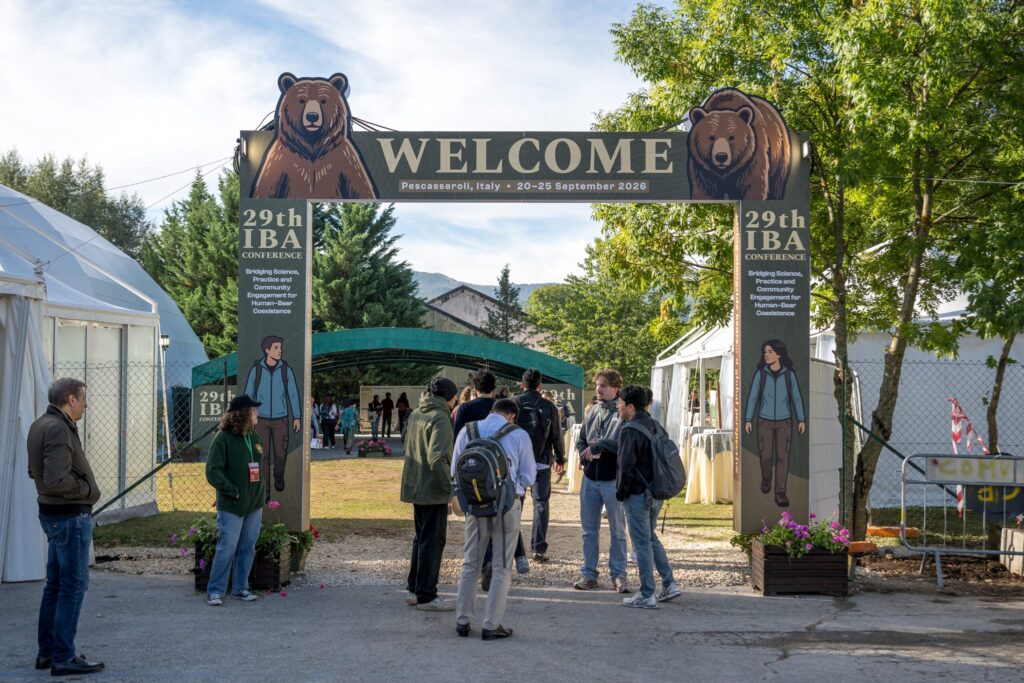
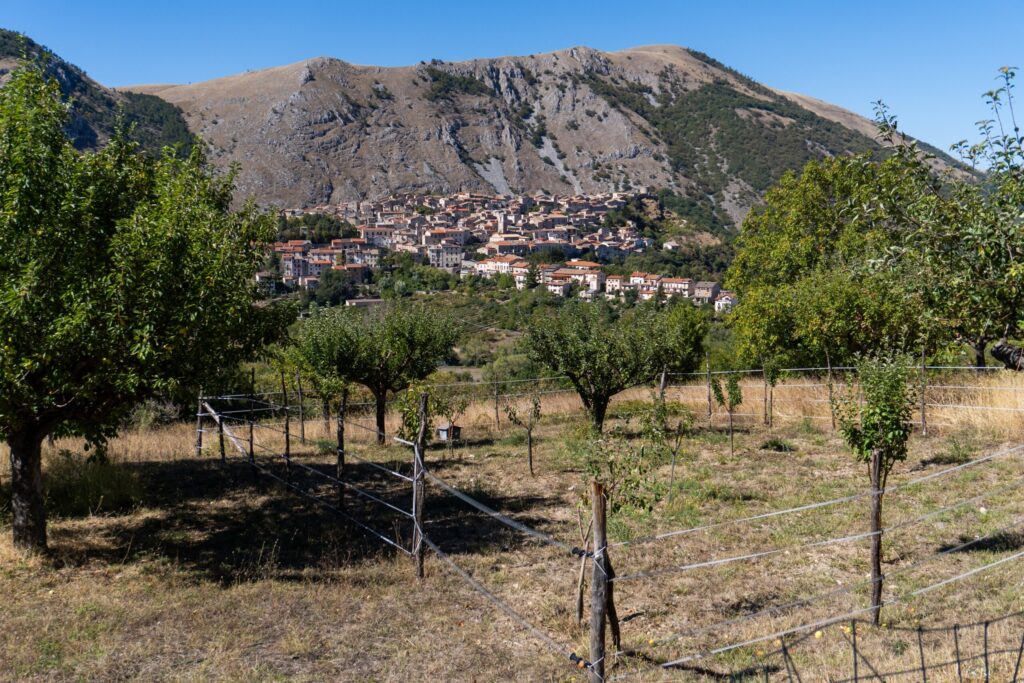
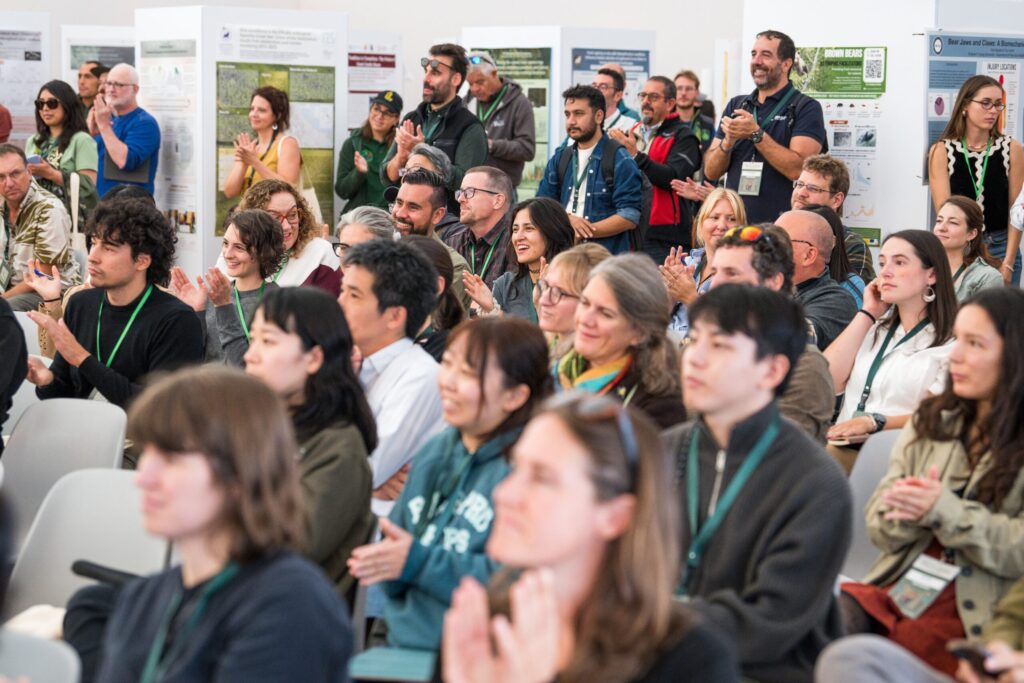
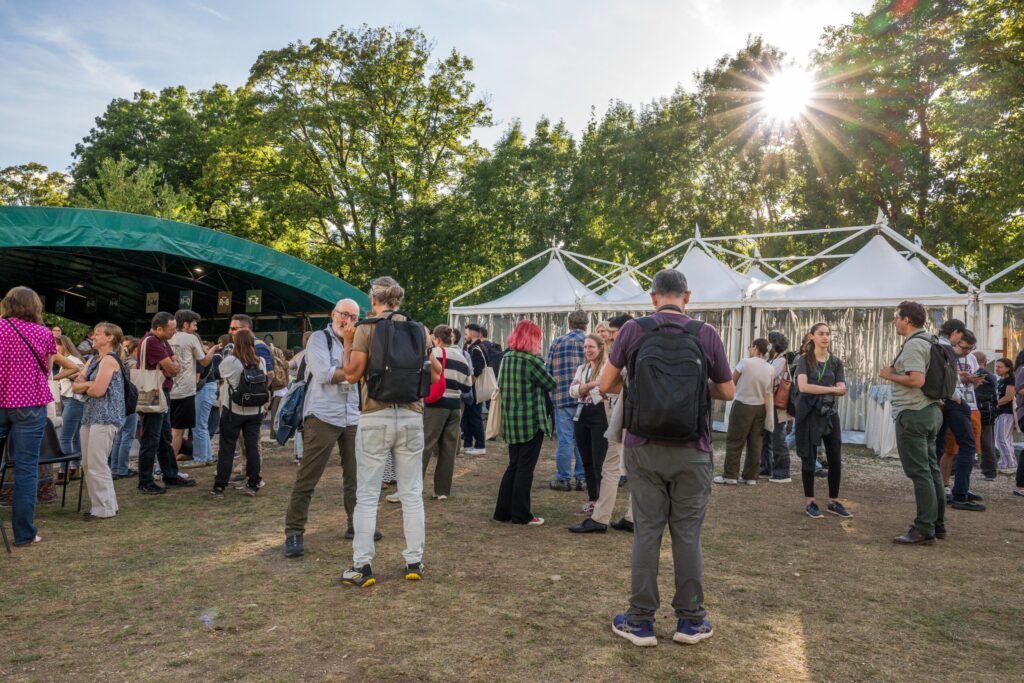
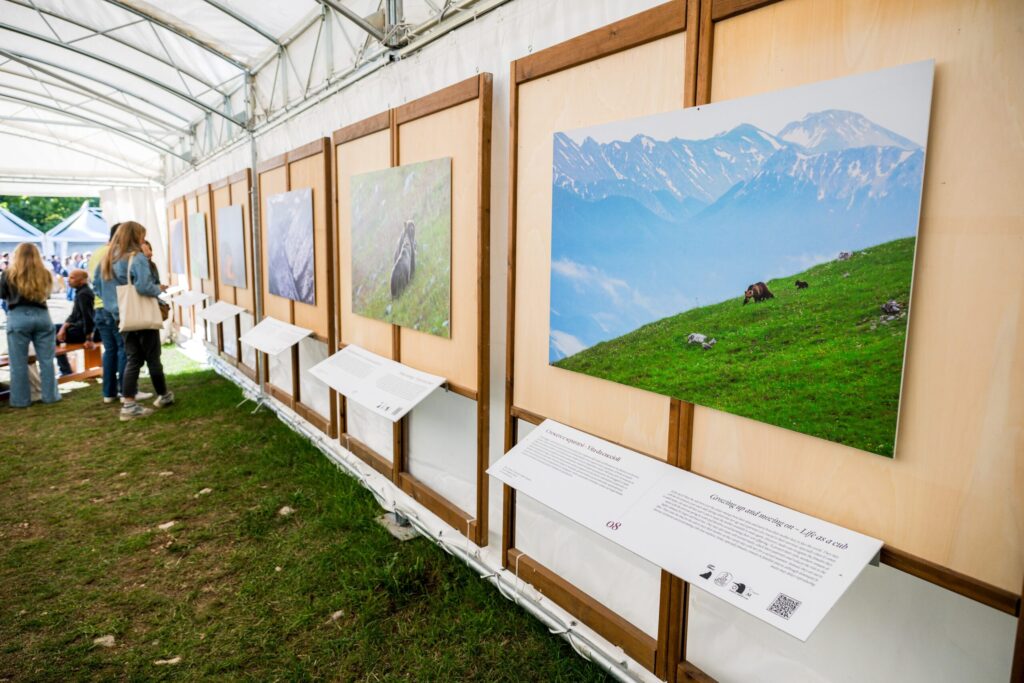
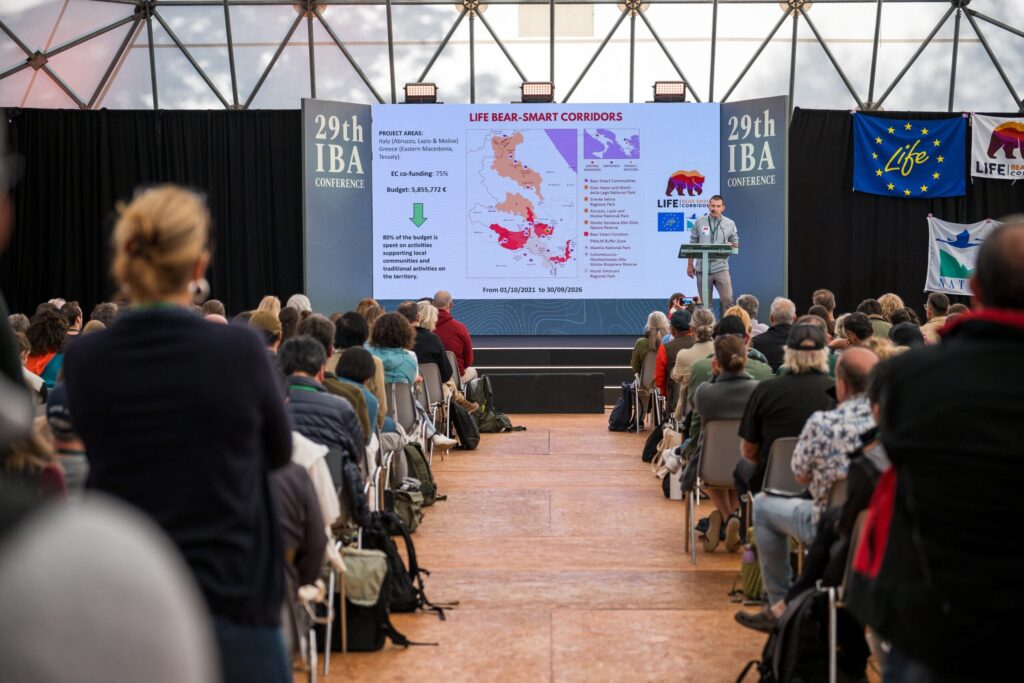
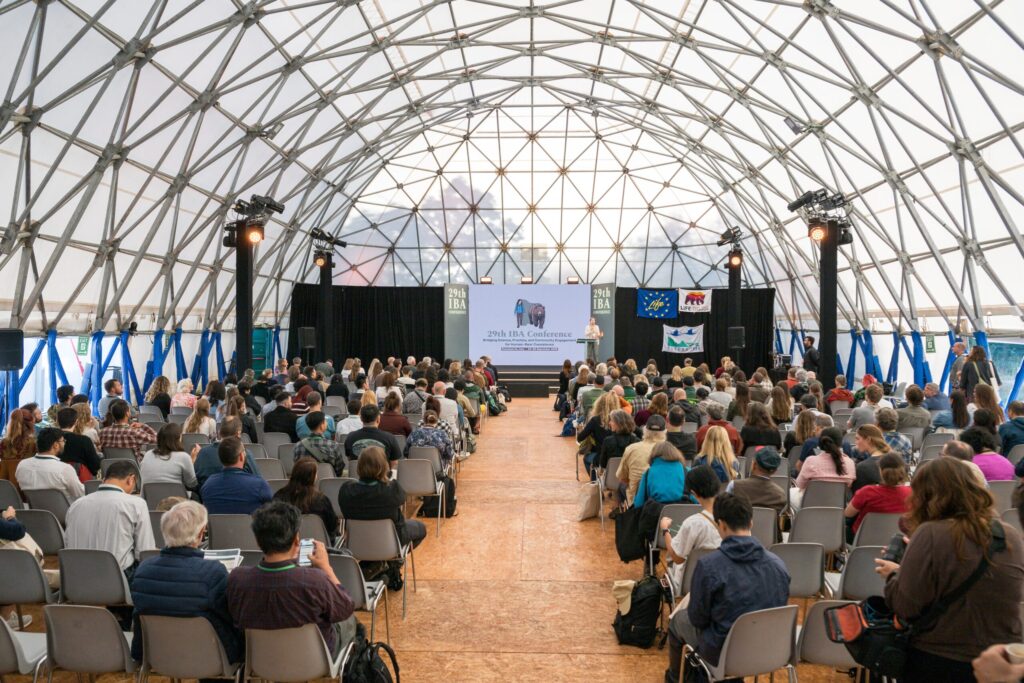
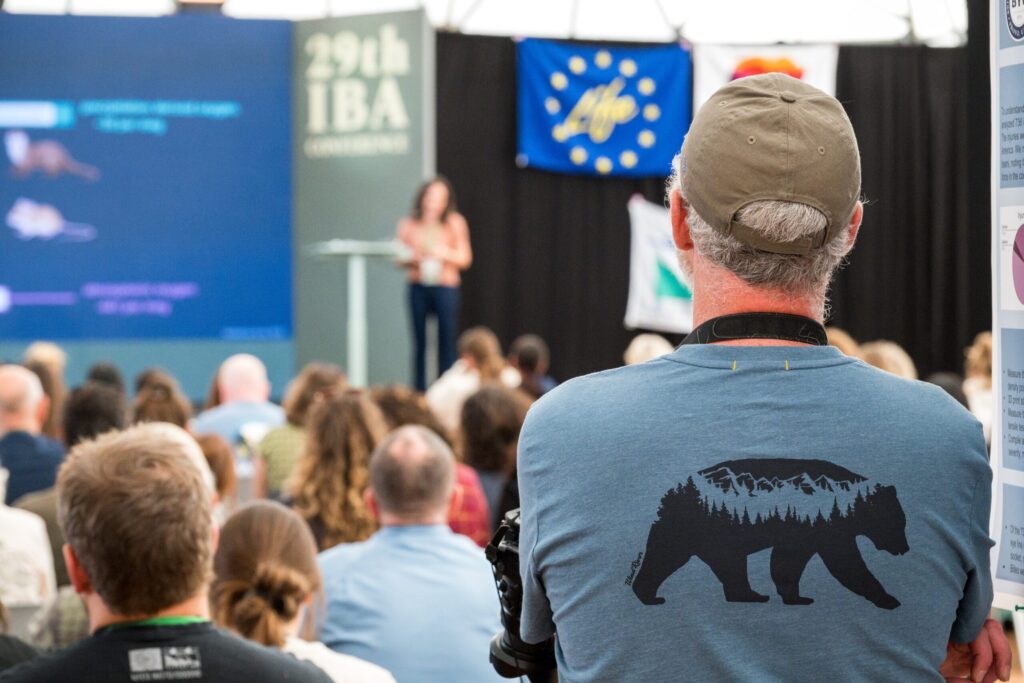
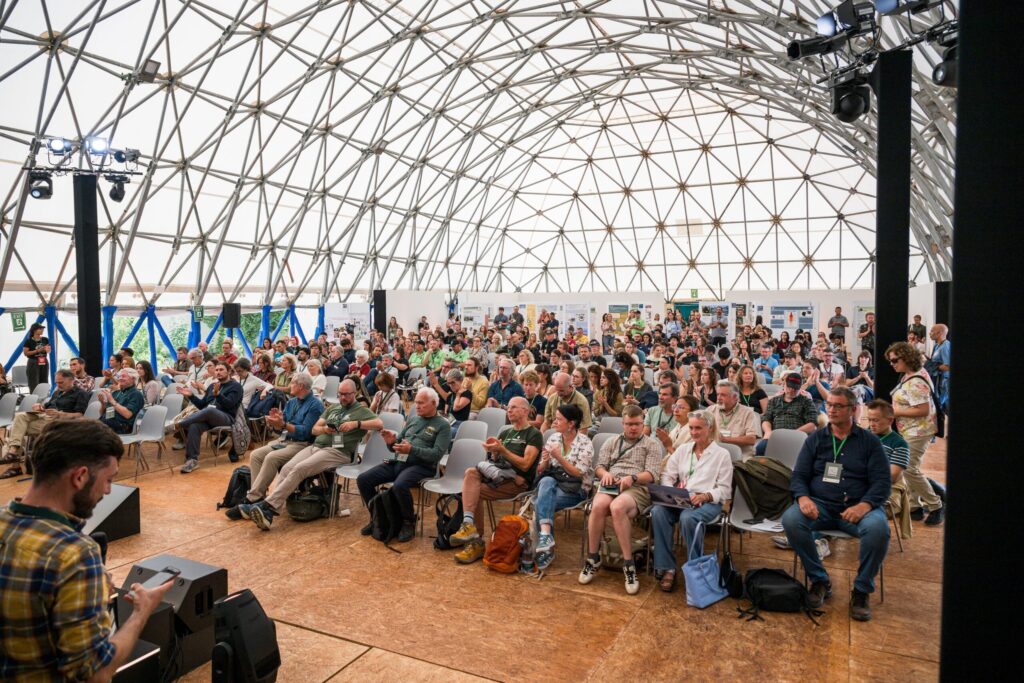
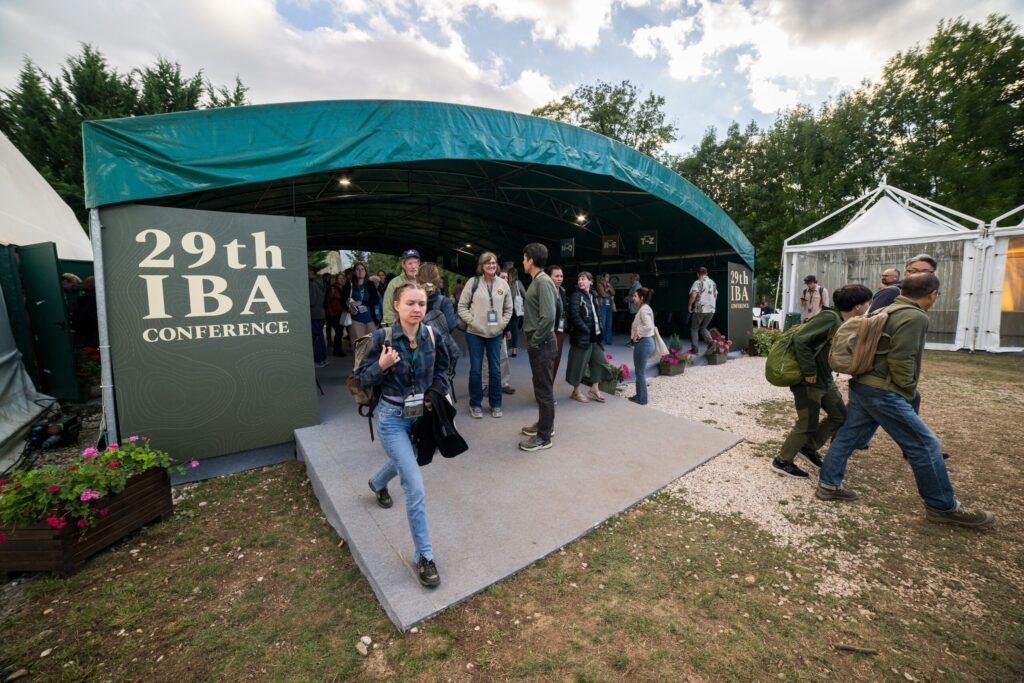
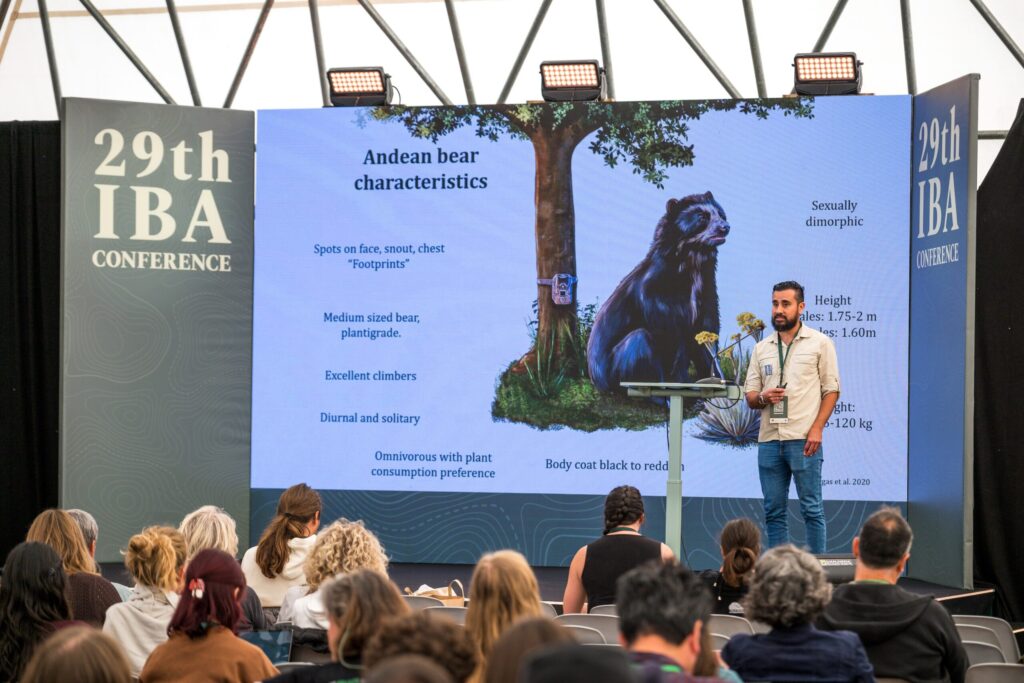
Around 400 people attended the twin IBA and LIFE Bear-Smart Corridors conferences hosted in Pescasseroli.
FILIPPO CASTELLUCCI / Arianna MugnariBuilding a better future for people and bears
Moving forwards, the Rewilding Apennines team will build on the foundations established by LIFE Bear-Smart Corridors initiative. They will continue working with Bear-Smart Communities, providing additional support where needed, while expanding the approach elsewhere. Attention will increasingly focus beyond protected areas, where the challenges facing dispersing bears are greatest.
The continued recovery of the Marsican brown bear will benefit far more than the species itself. As wide-ranging omnivores, bears disperse seeds and influence vegetation, while measures that improve habitat connectivity also benefit other wildlife. For people in local communities, their presence can strengthen connections with wild nature, generate local pride, and create opportunities for nature-based tourism and enterprise.
“Enabling people and bears to thrive together in the Central Apennines is a long-term mission, but I’m certainly more optimistic about the future of the Marsican bear than I was five years ago,” says Mario Cipollone. “There is growing international interest in the Bear-Smart approach, so I hope the experience we’ve gained here will ultimately help many more communities learn to live alongside recovering wildlife — for the benefit of both nature and people.”