

Ten semi-wild horses have arrived in the Dauphiné Alps, helping restore natural grazing in this spectacular region of France. Enabled by the European Wildlife Comeback Fund and strong collaboration between rewilding landscape teams, their introduction is expected to support biodiversity and strengthen wildfire resilience.

A wilder future takes shape
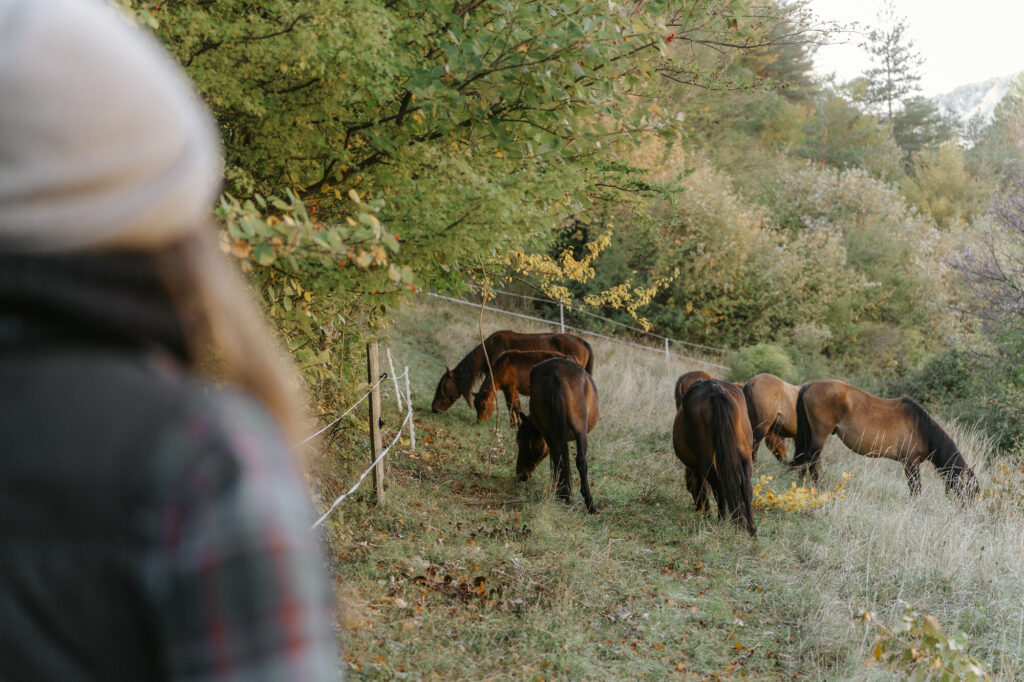
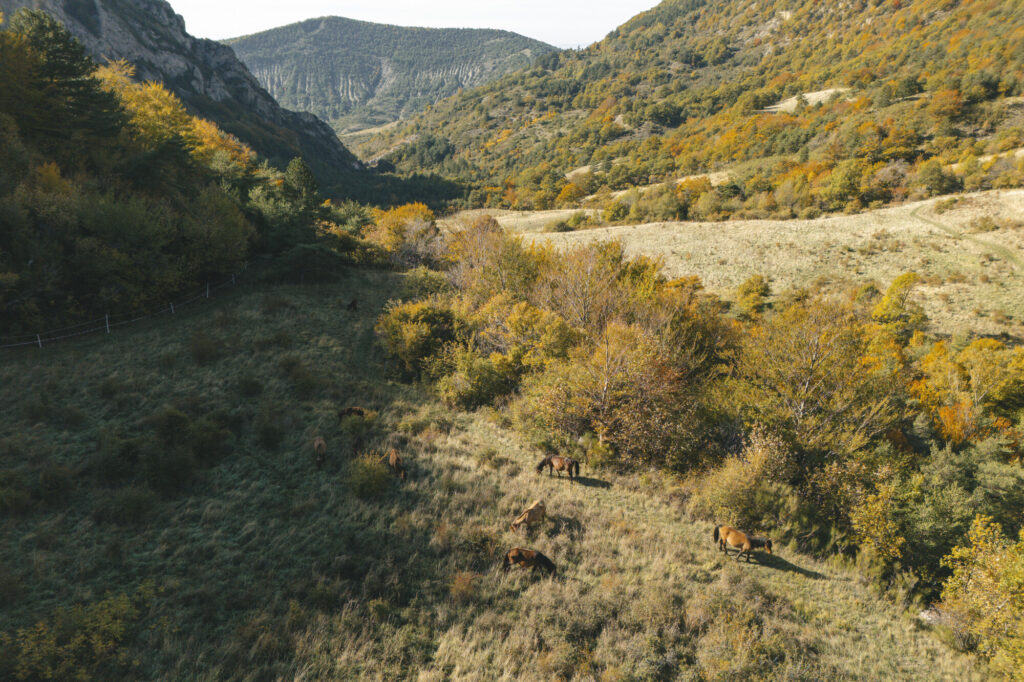
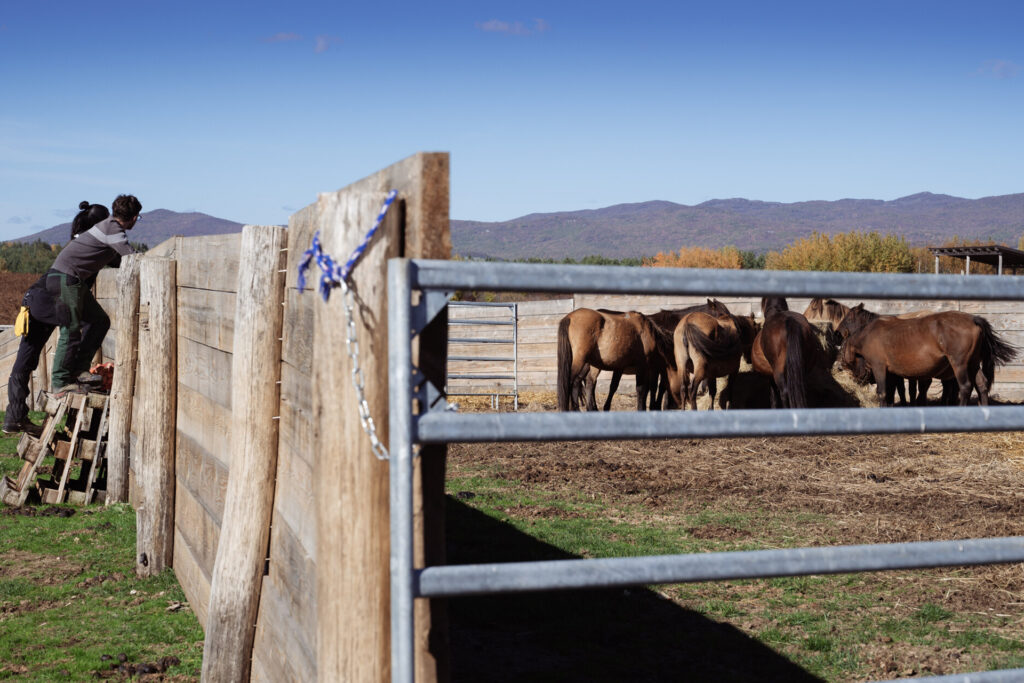
Against a backdrop of wooded slopes and autumn colours, ten semi-wild horses are settling into their surroundings in the Dauphiné Alps rewilding landscape in southeastern France. Having arrived in late October, the animals quickly began grazing, taking their first steps towards restoring a vital natural process that has diminished across much of the region.
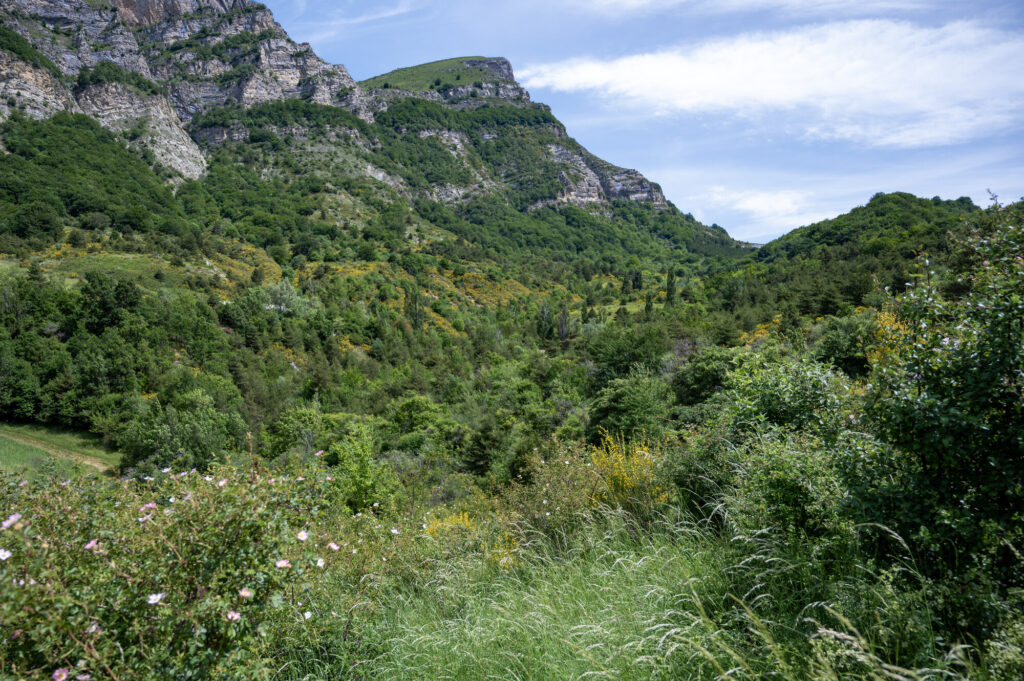
The horses are currently acclimatising to their surroundings on a privately owned, 170-hectare estate, where grasslands, woodland, rocky slopes and freshwater habitats support a rich variety of wildlife. Around 160 hectares will eventually be available for natural grazing, with the herd’s range gradually expanding as the animals become established.
Their arrival marks the beginning of a new natural grazing initiative in the Dauphiné Alps. By allowing large semi-wild herbivores to shape vegetation through their feeding and movement, the Rewilding France team hope to create a more varied, resilient landscape and demonstrate the potential of this approach to other landowners in the region.
Boosting natural grazing
Like many parts of the French Alps, the Dauphiné Alps have undergone significant changes over the centuries. Large wild herbivores, which once helped maintain open habitats through their grazing, gradually disappeared from the landscape. Traditional livestock grazing subsequently played a similar role, but as rural populations have declined, this too has diminished. Trees and shrubs have increasingly colonised formerly open areas, threatening the plants and animals that depend on them.
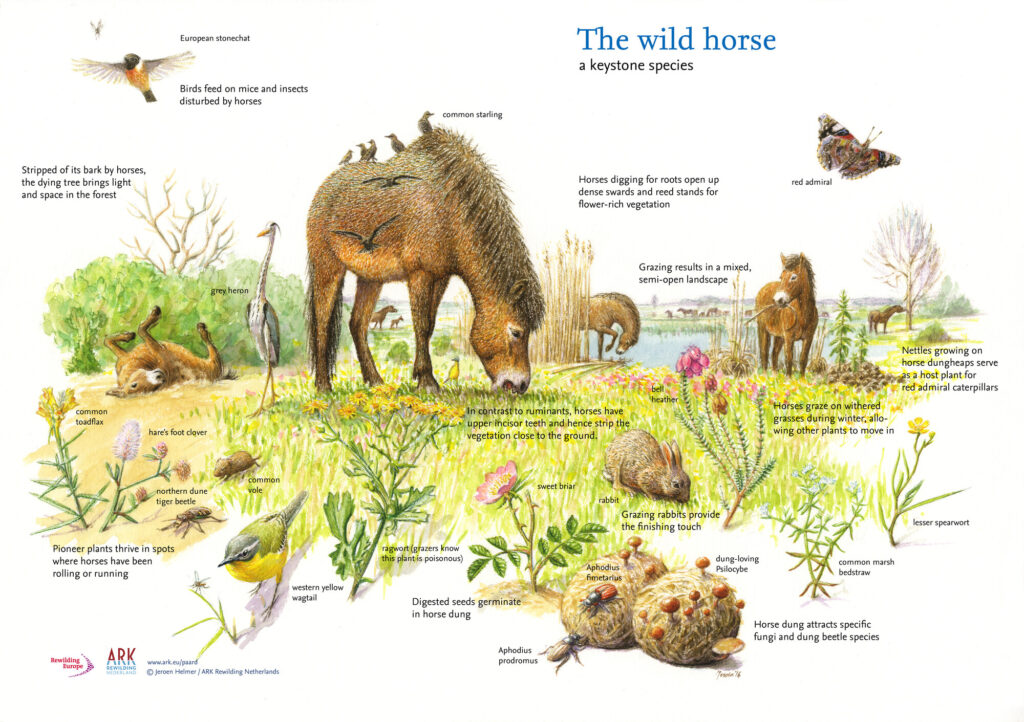
By grazing throughout the year, the horses are expected to help maintain a diverse mosaic of habitats, preventing some areas from becoming dominated by dense vegetation. Their feeding, trampling and movement will create space for different plant species to flourish by opening up patches of vegetation and exposing bare soil where seeds can germinate, while their dung will support insects, birds and other wildlife.
Natural grazing could also help address another growing concern in the region: severe, climate-fuelled wildfires. By consuming grasses and other vegetation, large free-roaming wild and semi-wild herbivores such as horses, Tauros and deer can help reduce the accumulation of combustible material in some habitats. Following a major wildfire near the town of Die in the Dauphiné Alps in 2026, this potential contribution to landscape resilience is particularly relevant.
A model for nature recovery
For Olivier Raynaud, Director of Rewilding France, the introduction of the horses offers an opportunity to demonstrate how natural grazing can complement existing land management practices, helping restore natural processes, maintain open habitats and reduce wildfire risk.
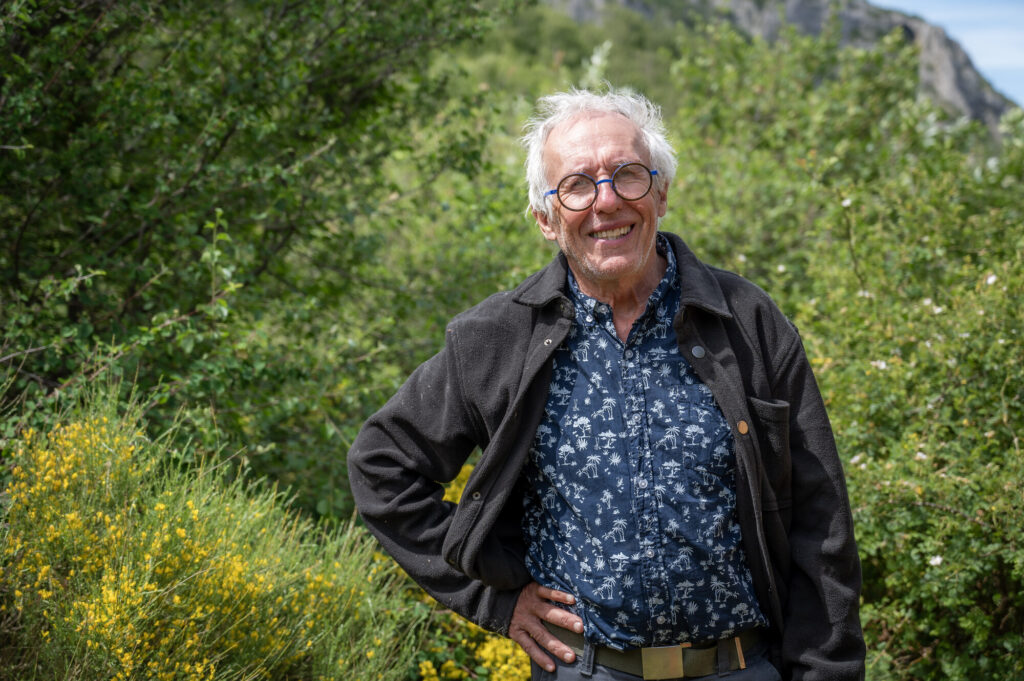
The initiative has been made possible by the commitment of landowner Olivier Goirand, who has worked closely with the Rewilding France team. Concerned about the gradual disappearance of open habitats on his property, he recognised the potential for semi-wild herbivores to restore a more varied landscape. “My aim is to create a model site that can serve as an example to others,” he explains.
A long-term agreement with Rewilding France will help protect the estate’s habitats and support its continued recovery through natural grazing and other rewilding measures. For Goirand, the arrival of the horses represents the realisation of a long-held ambition to see the land become wilder and more diverse.
Building on success in Croatia
The arrival of the horses in the Dauphiné Alps also marks an important milestone for Rewilding Europe: the first transfer of animals directly between two of its rewilding landscapes. The ten animals came from the Lika Plains in Croatia’s Velebit Mountains, where a natural grazing initiative established almost a decade ago uses semi-wild horses and Tauros to maintain a rich mosaic of grasslands, scrub and woodland within a large fenced area. The horses are descended from animals originally brought from Latvia and the Balkans.
Over the past ten years, the Rewilding Velebit team have observed encouraging ecological changes in areas where horses graze, including the appearance of new plant species, reductions in dense stands of bracken and invasive vegetation, and fewer summer wildfires. While other factors may also have contributed to these changes, they highlight the potential of natural grazing to support healthier, more resilient ecosystems. The relocation forms part of proactive population management, helping prevent excessive grazing pressure in the fenced area rather than responding to any current shortage of food or space.
“We are proud that this translocation will contribute to the expansion of natural grazing in the French Alps,” says Marija Krnjajić, Rewilding Velebit Team Leader. “It shows how the knowledge and experience gained through rewilding can extend beyond a single landscape and support nature recovery elsewhere in Europe.”
“WE ARE PROUD THAT THIS TRANSLOCATION WILL CONTRIBUTE TO THE EXPANSION OF NATURAL GRAZING IN THE FRENCH ALPS.”
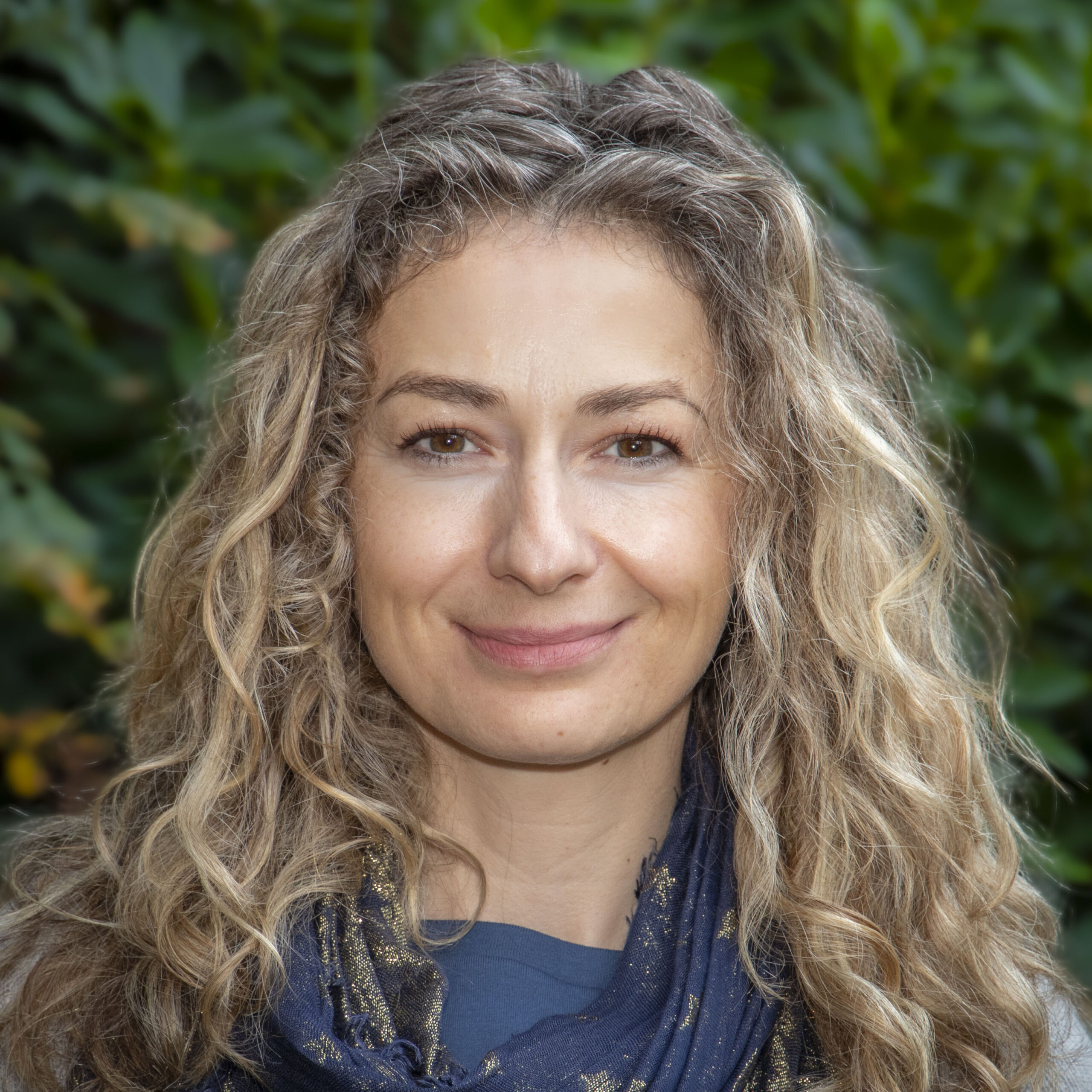 Marija Krnjajić
A carefully coordinated operation
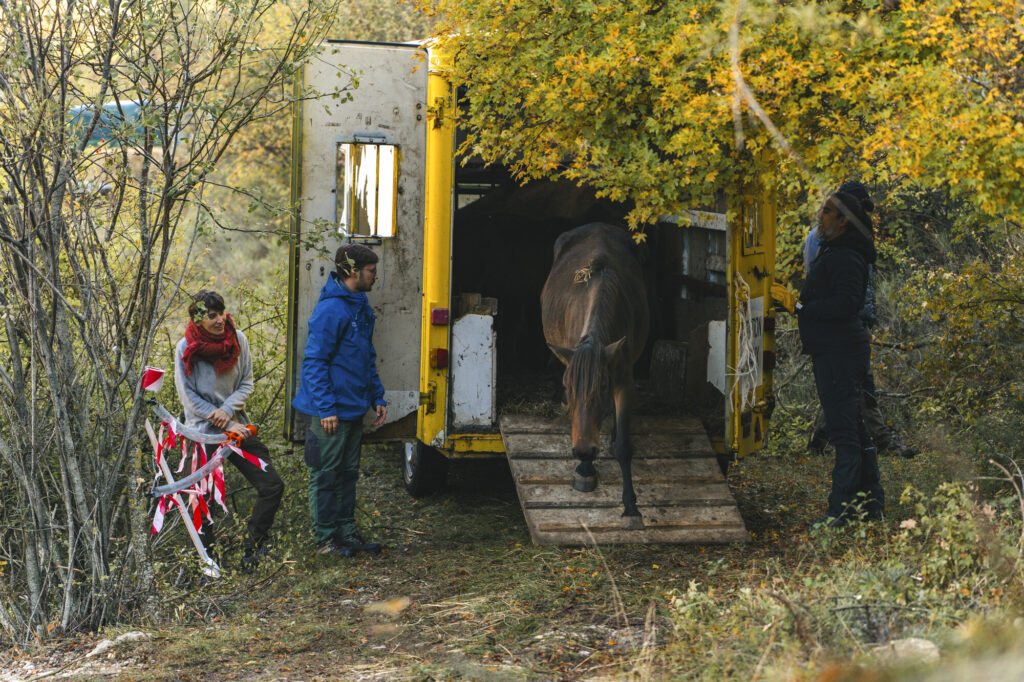
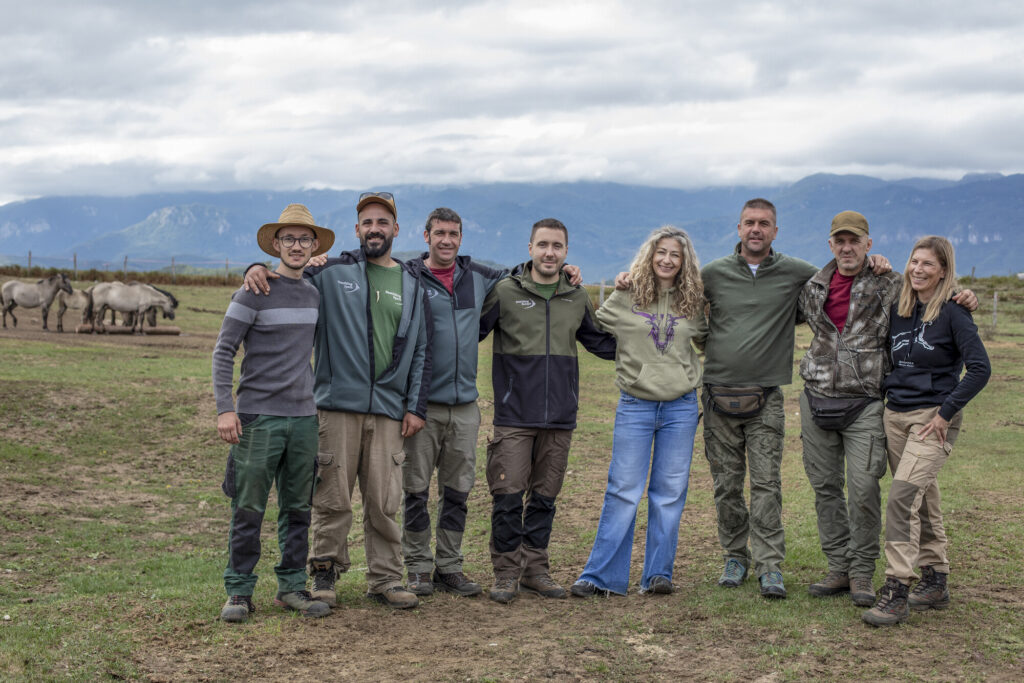
Moving ten semi-wild horses across Europe required months of planning and close cooperation between rewilding teams in Croatia, France and Spain. Animal welfare was a priority throughout, with veterinarians and natural grazing specialists helping select a complete social group in good health, preserving established bonds between the animals. The horses were monitored daily during a one-month preparation period, while veterinary checks, permits and transport arrangements were completed.
Four herd managers from the Velebit Mountains, Dauphiné Alps and the Iberian Highlands rewilding landscape in Spain contributed to the operation. The Rewilding Spain team brought valuable experience of working with semi-wild horses, while natural grazing specialist Oscar Campana Cardenas provided guidance on safe, low-stress handling and transportation.
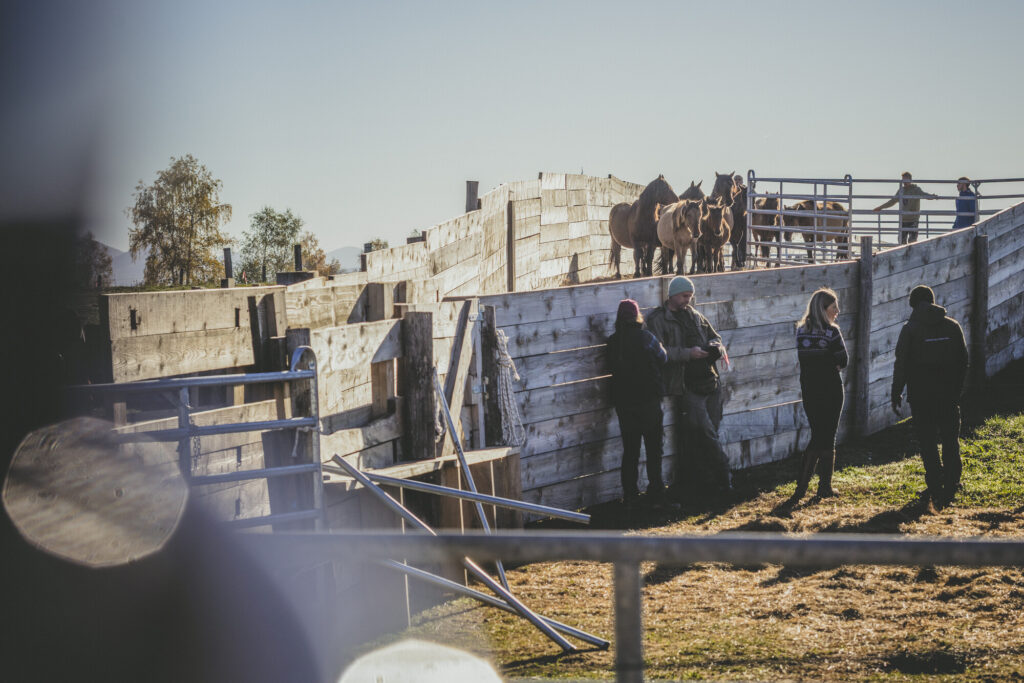
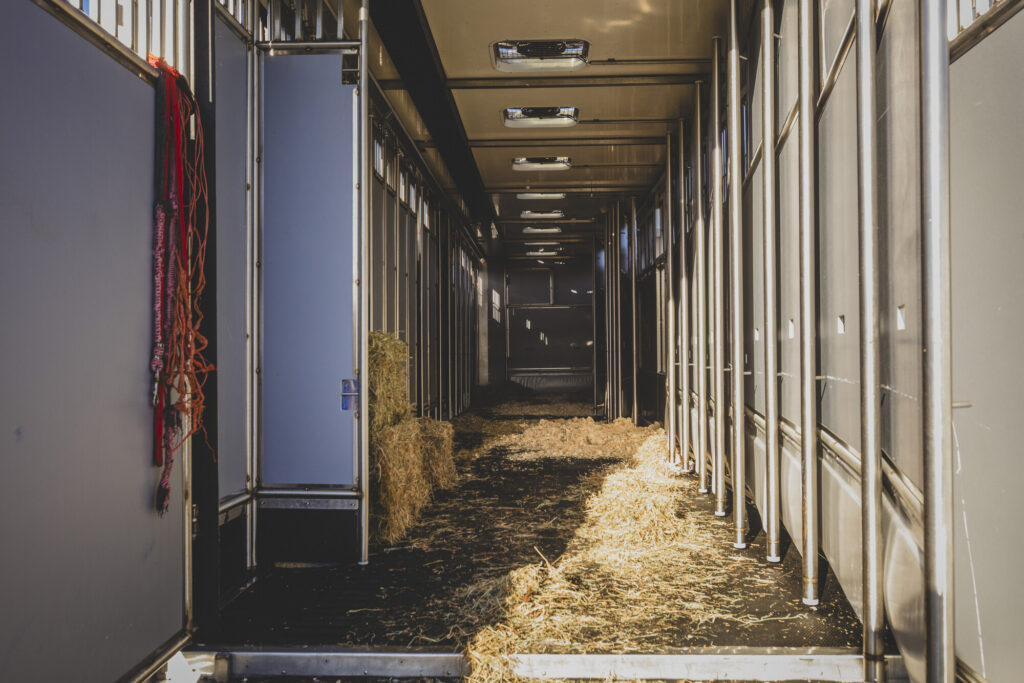
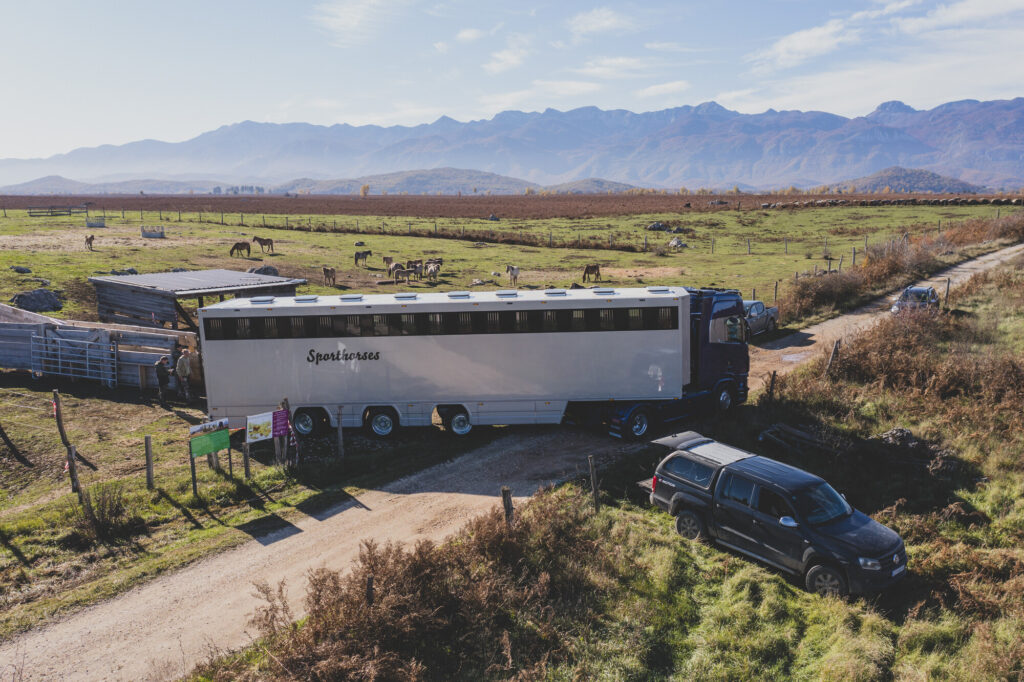
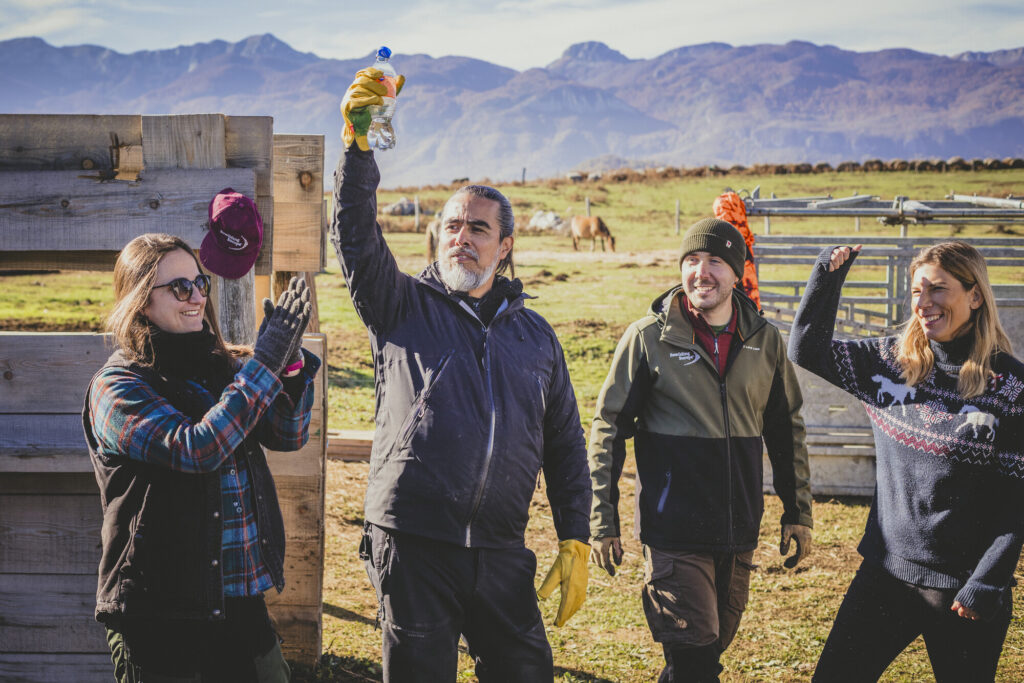
The horses travelled together in a specialist vehicle on a road journey lasting around 20 hours, with arrangements for feeding, drinking and monitoring their condition. Beyond the successful translocation itself, the collaboration has strengthened the expertise and capacity of the participating teams to undertake similar initiatives in the future.
Looking to the future
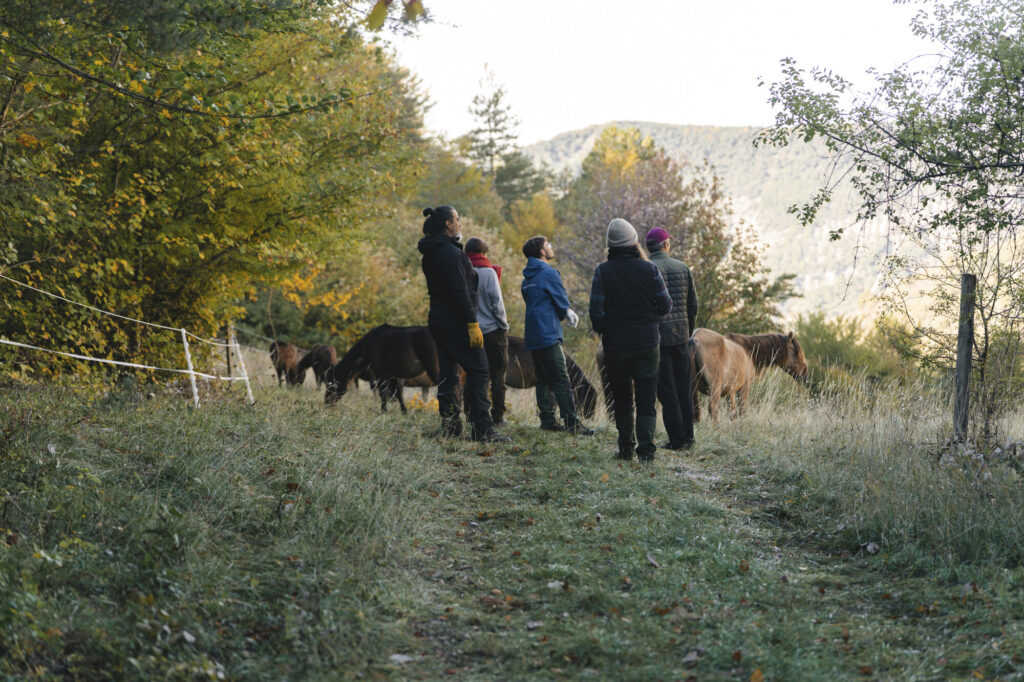
Since arriving in France, the horses have been settling into their surroundings, with GPS collars allowing the Rewilding France team to monitor their movements and behaviour. Regular checks are helping ensure they remain healthy, while their grazing area will be expanded gradually to allow them to explore and shape more of the estate.
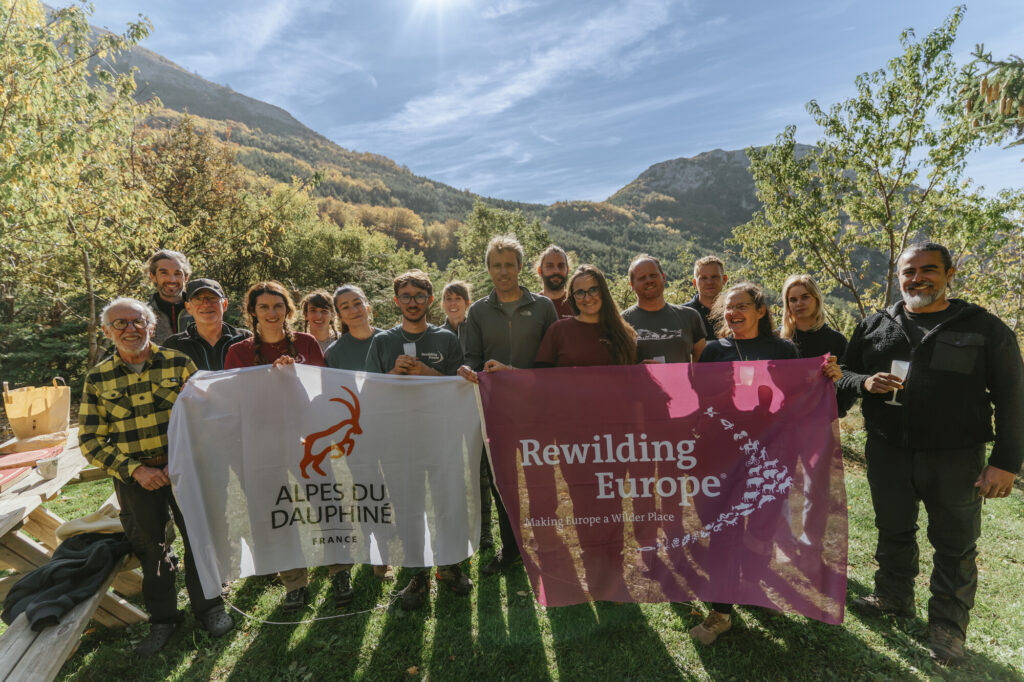
The initiative is also creating opportunities to develop rewilding expertise. Noé Laborde, Rewilding France’s new herd manager, helped coordinate the translocation and will be responsible for monitoring the horses as they settle into their surroundings. Having grown up on a family farm where Galloway cattle are raised through extensive grazing, he brings valuable practical experience to the role.
“This initiative is a welcome challenge for me,” he says. “It gives me the opportunity to put what I have learnt during my agriculture studies into practice, while helping to restore natural grazing in the Dauphiné Alps.”
By demonstrating how natural grazing can be restored on privately owned land, the initiative could encourage similar approaches elsewhere in the French Alps. It also illustrates how cooperation between rewilding landscapes can help return large semi-wild herbivores to areas where their ecological role is needed — supporting biodiversity, strengthening ecosystem resilience and creating new opportunities for local people.
Keeping herds together
Horses are highly social animals, forming close bonds within established groups. Preserving these relationships during translocations helps minimise stress and allows animals to continue behaving naturally as they adapt to unfamiliar surroundings.
For natural grazing initiatives, introducing an established social herd can also support longer-term success. Animals that are comfortable together can settle more readily into their new environment, where their grazing, movement and interactions help shape a varied landscape.
Find out more in Rewilding Europe’s rewilding horses brochure.
Connecting landscapes through natural grazing
Rewilding Europe’s Natural Grazing Facility helps rewilding initiatives access the large herbivores and expertise needed to restore natural grazing. By connecting suitable sources of animals with landscapes where their ecological role can be re-established, the facility supports responsible population management and the expansion of natural grazing across Europe.
This approach can help maintain sustainable grazing in established rewilding initiatives, while allowing animals to contribute to nature recovery elsewhere. Working with rewilding teams and partners, the facility aims to restore this vital natural process across more landscapes, supporting biodiversity, ecosystem resilience and new opportunities for nature-based economies.
