Several thousand juvenile Atlantic sturgeon have been released into Poland’s Ina River, marking an important step forwards in the return of this iconic species across the Oder Delta. Their comeback is part of wider efforts to restore free-flowing rivers rich in fish and other wildlife — healthier, more resilient waterways that are essential for both nature and people.

Bringing rivers back to life
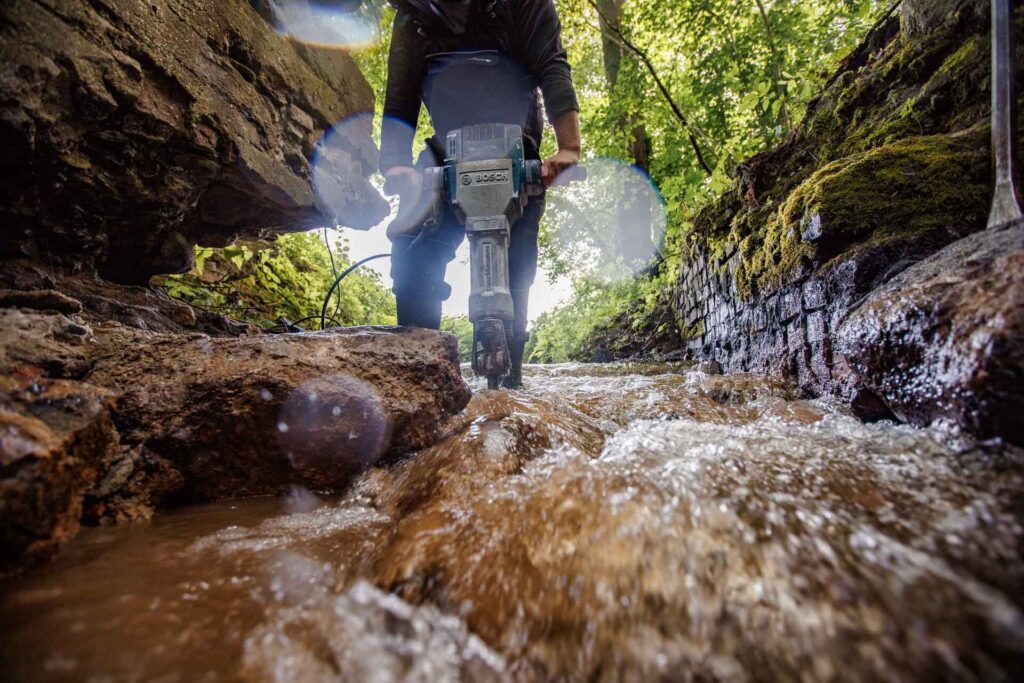
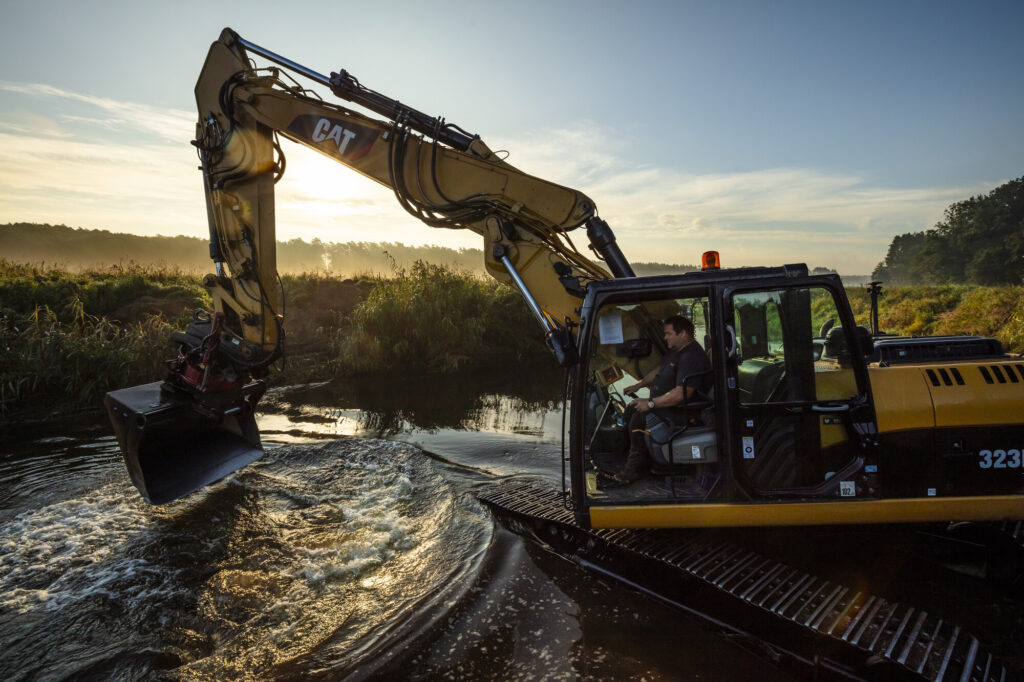
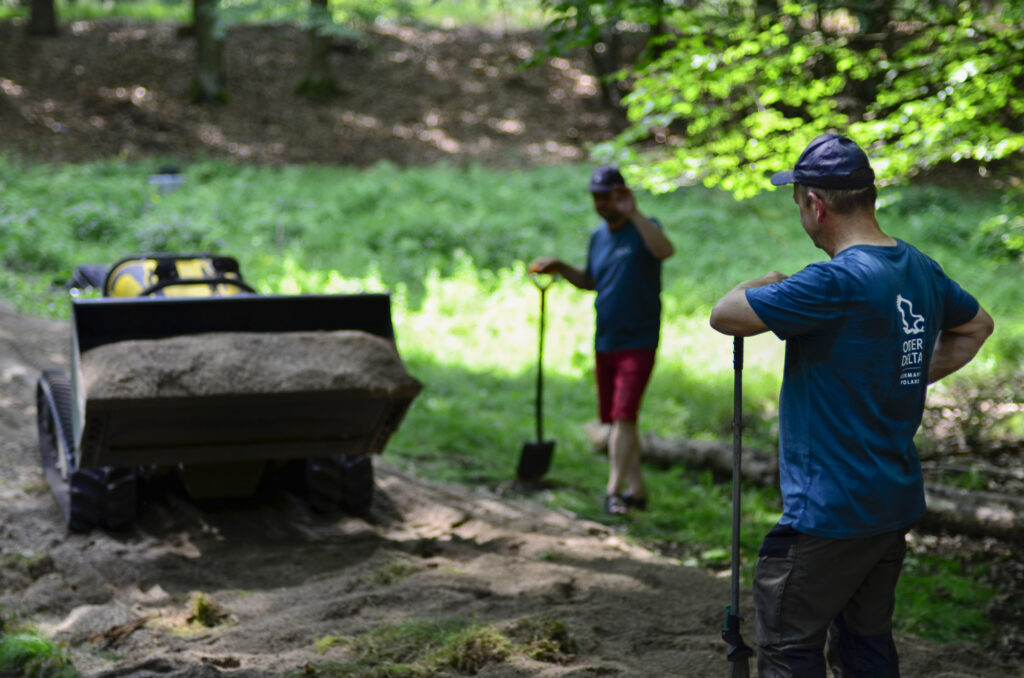
Across the Oder Delta, rewilding is helping to breathe new life into rivers that have been historically straightened, deepened, embanked and choked by dams and weirs. Working with local partners on both sides of the Polish-German border, the Rewilding Oder Delta team are removing barriers, restoring spawning grounds, rewetting wetlands and revitalising riverside habitats.
The aim is to create more vibrant, free-flowing rivers that can support diverse and abundant populations of native fish and other wildlife. For migratory species in particular, reconnecting freshwater habitats with the Stettin Lagoon and Baltic Sea is critical, enabling fish to move freely between feeding, nursery and spawning areas. Healthier, more natural rivers are essential for people too — providing cleaner water, reducing the impact of floods and droughts, supporting fisheries and recreation, and helping landscapes become more resilient to climate change.
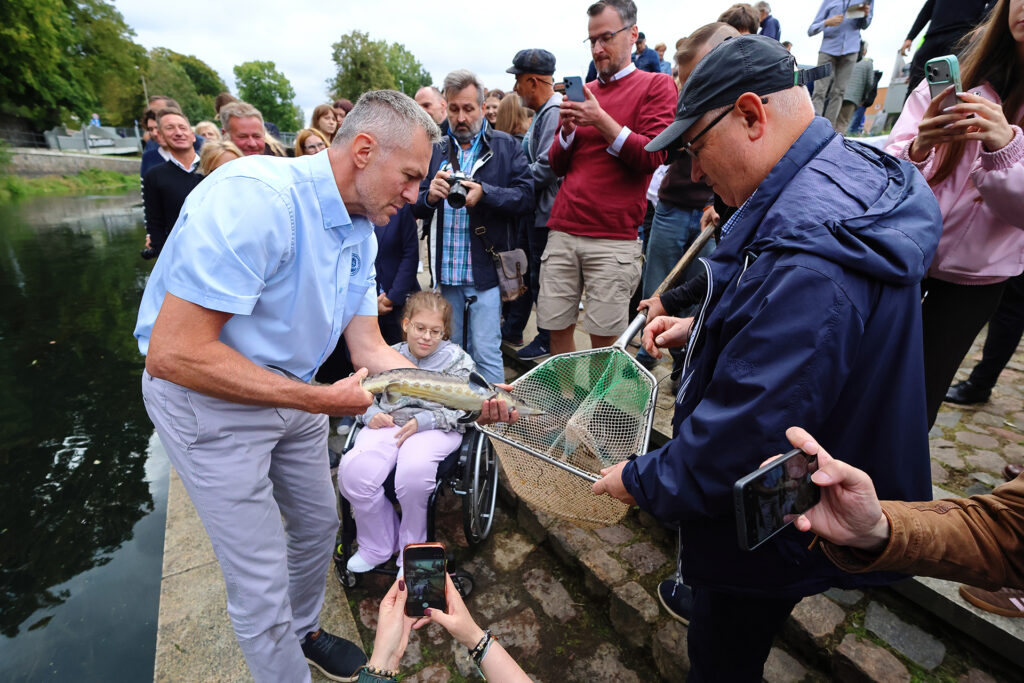
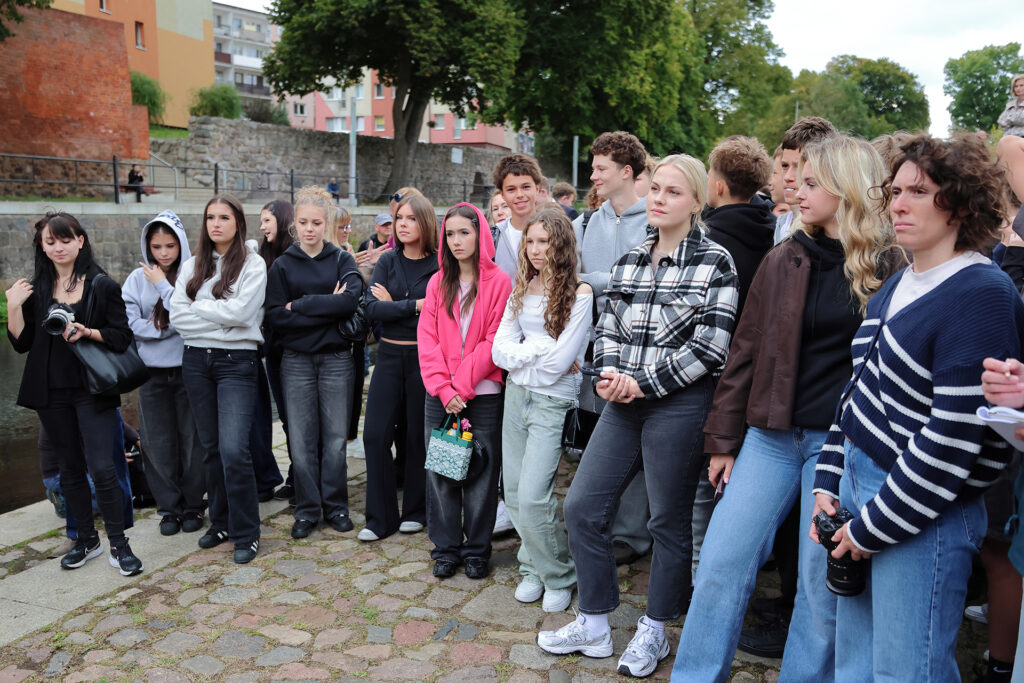
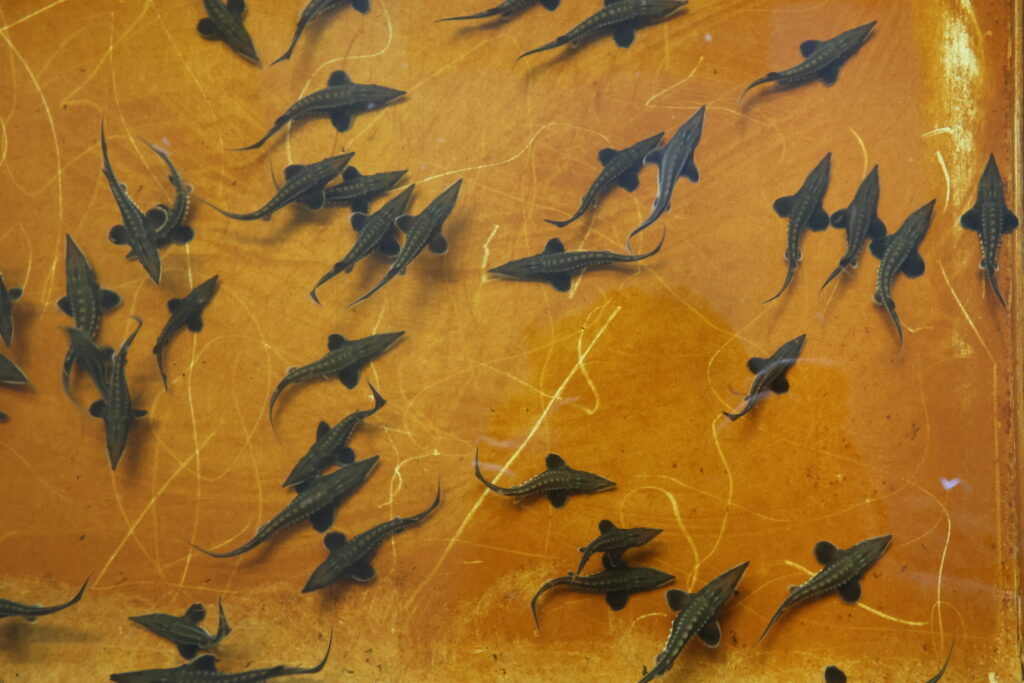
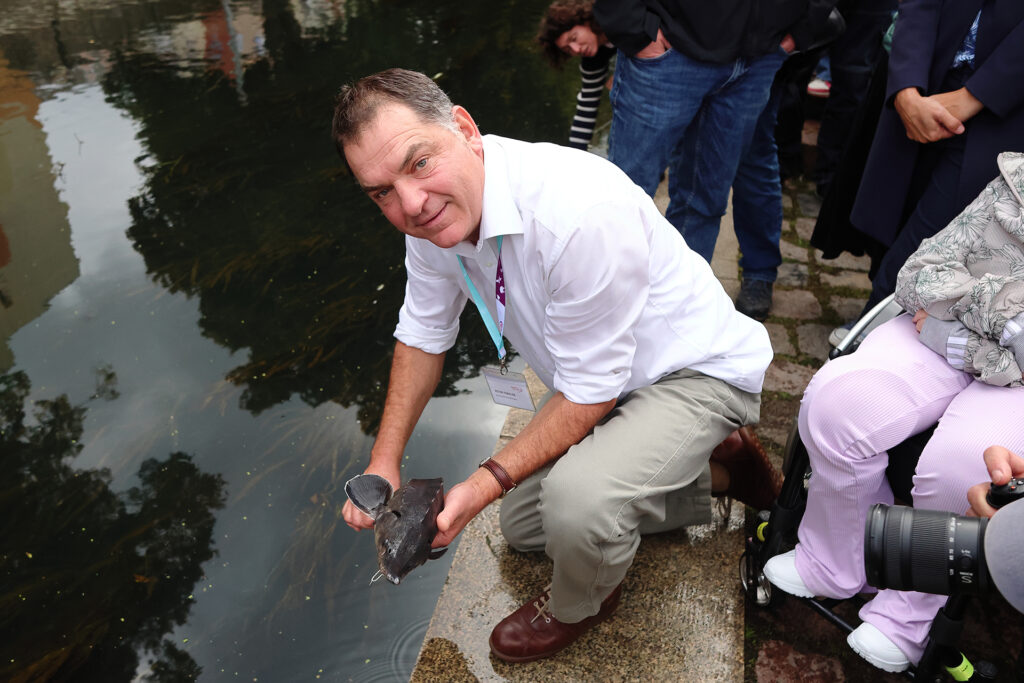
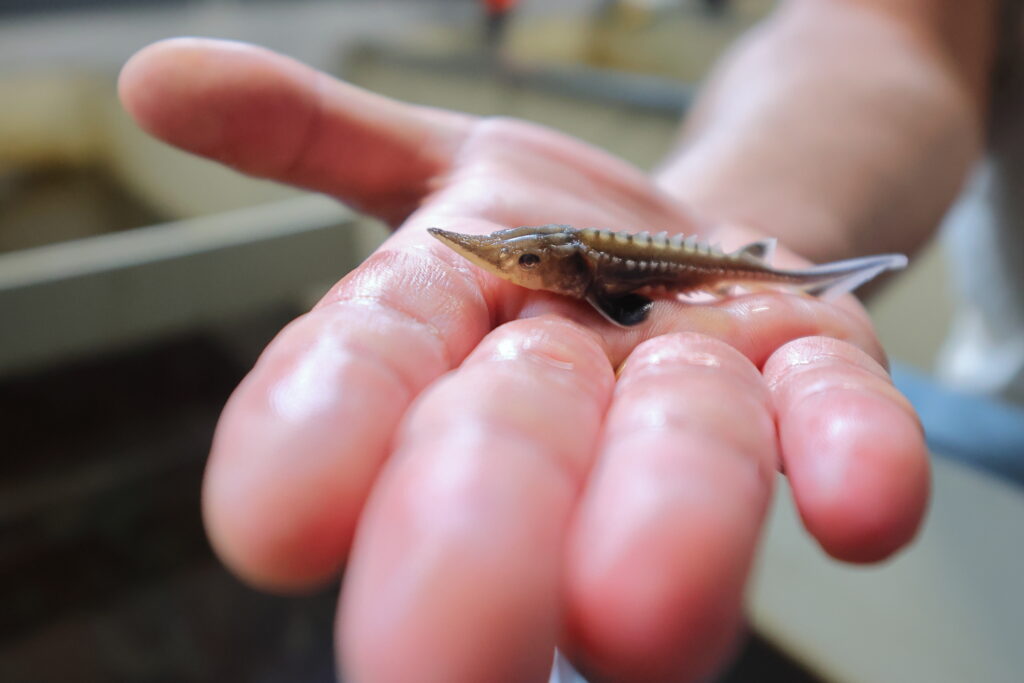
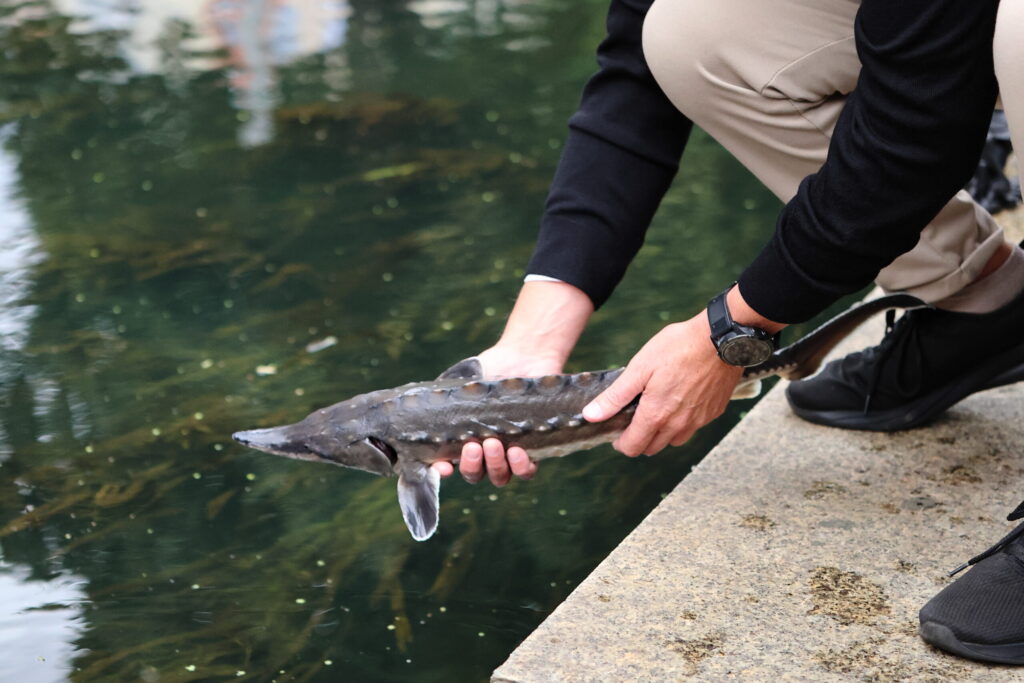
On September 18, this long-term recovery took an exciting step forward when 15 larger juvenile Atlantic sturgeon (Acipenser oxyrinchus) — also known in the region as Baltic sturgeon — and several thousand smaller fish, each around 15 centimetres long, were released into the Ina River at Goleniów. Hundreds of local people took part, including schoolchildren, anglers and senior citizens. This was the first such release on the Polish side of the Oder Delta, following previous releases in Germany.
A river guardian returns
Atlantic sturgeon once inhabited the Baltic Sea and its tributaries, but disappeared from the region during the twentieth century. Overfishing played a major role, compounded by river straightening and pollution, the destruction of spawning habitat, and barriers that prevented fish migrating upstream to reproduce.
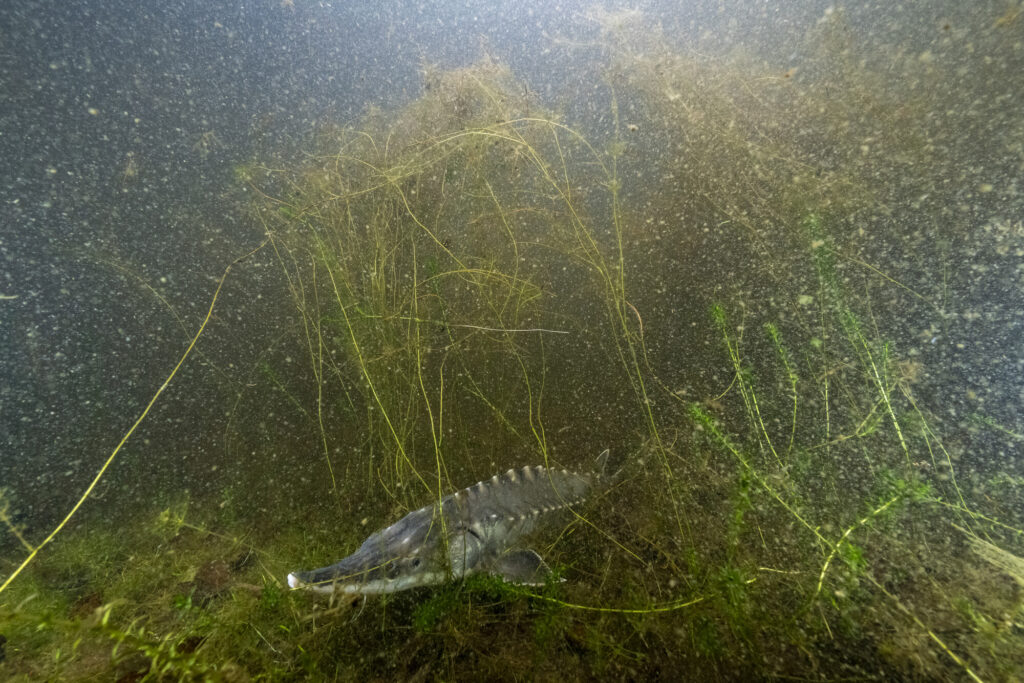
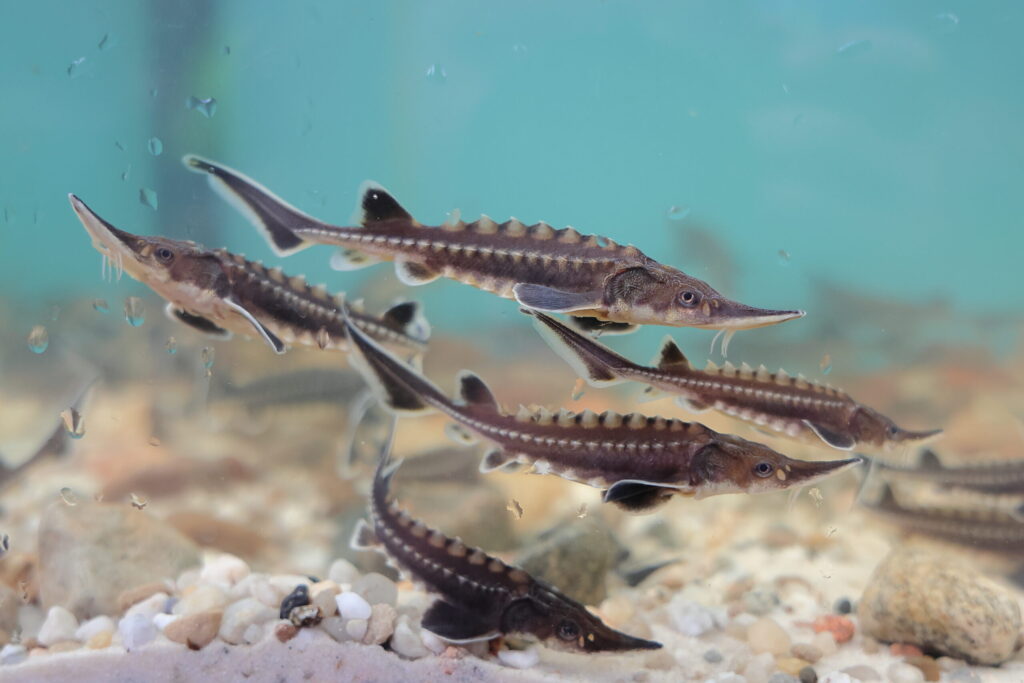
Their loss meant the disappearance of one of Europe’s most remarkable freshwater fish. Descended from an ancient lineage, Atlantic sturgeon have retained a prehistoric appearance, with five rows of armour-like bony plates, or scutes, and sensitive, whisker-like barbels that help them locate prey on the riverbed. They can live for many decades, reach several metres in length, and weigh over 350 kg.
Their return matters far beyond the species itself. Sturgeon need free-flowing, oxygen-rich rivers and good-quality spawning habitat, which means that restoring conditions that support their comeback also creates healthier habitat for an array of other aquatic species. As bottom feeders, they disturb riverbed sediments as they forage, while their migrations provide a vital link between freshwater and marine ecosystems.
Creating the right comeback conditions
The Ina River was chosen as the location for the release not only because sturgeon have historically occurred here, but also because years of rewilding efforts have made it increasingly suitable for their return. Migration barriers have been removed, natural habitats restored and water quality improved, making the river a potentially important site for the recovery of sturgeon across the wider Oder catchment.
“By protecting the sturgeon and its habitats, we are also protecting many other fish species,” says Dr Jan Krzystolik, an ichthyologist at the Berlin-based Leibniz Institute of Freshwater Ecology and Inland Fisheries (IGB). “Freeing rivers from barriers not only helps sturgeon thrive, but salmon, eels and other migratory fish too.”
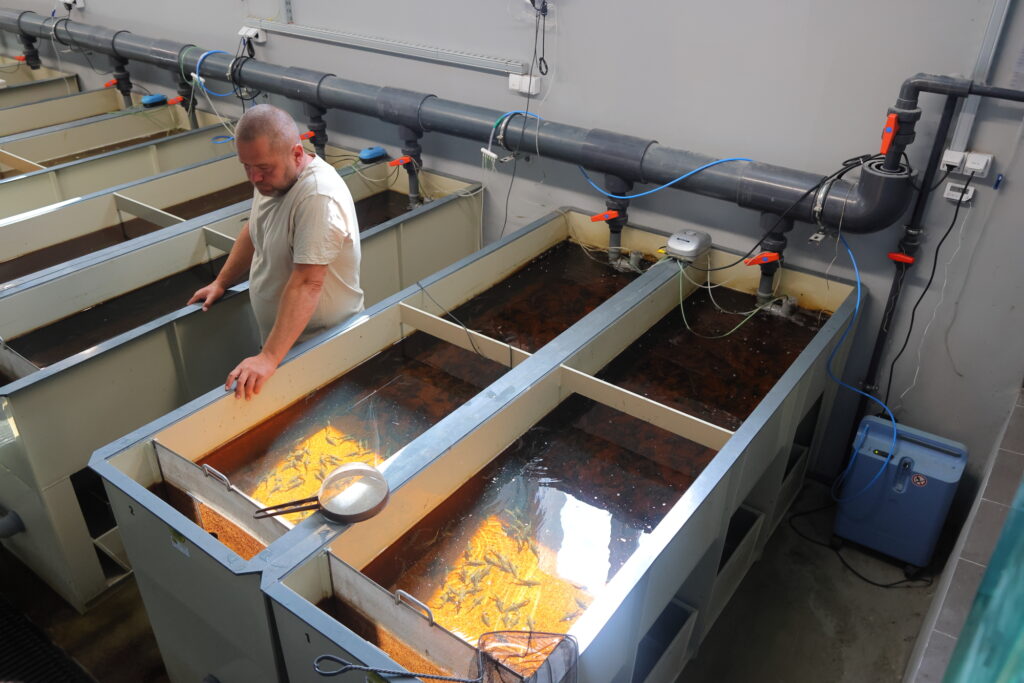
The young sturgeon released in September were raised at the Polish Anglers Union’s fish farming and rearing centre in Goleniów. Their larvae originated in Germany, where IGB and the State Research Institute for Agriculture and Fisheries Mecklenburg-Vorpommern oversaw reproduction and hatching. At Goleniów, the juveniles were fed exclusively on natural food and raised in tanks supplied with water from the Wiśniówka, a tributary of the Ina. This helped them adjust to local conditions before entering the river.
Towards a thriving population
September’s release is the beginning of an ambitious long-term programme. The plan is to reintroduce more than 20,000 young sturgeon in 2027, with the partners ultimately aiming to release as many as 100,000 juvenile fish every year.
“By combining these releases with the rewilding of rivers across the region, we want to give sturgeon the best possible chance to establish a self-sustaining population,” explains Tomasz Pezold Knežević, Head of the Wilder Nature team at Rewilding Oder Delta. “If we succeed, the Polish Oder Delta could become one of Europe’s most important regions for sturgeon restoration, showcasing what long-term collaboration can achieve for rivers and the wildlife they support.”
“IF WE SUCCEED, THE POLISH ODER DELTA COULD BECOME ONE OF EUROPE’S MOST IMPORTANT REGIONS FOR STURGEON RESTORATION, SHOWCASING WHAT LONG-TERM COLLABORATION CAN ACHIEVE FOR RIVERS AND THE WILDLIFE THEY SUPPORT.”
 Tomasz Pezold Knežević
The importance of free-flowing rivers
For the sturgeon in the Ina and other local waterways to thrive, releases must go hand-in-hand with continued river recovery. The Rewilding Oder Delta team are now working to restore connectivity along the Wołczenica, Sławęcinka and Gowienica rivers, with support from the Open Rivers Programme.
Planned barrier removals will open up dozens more kilometres of river, allowing migratory fish such as sea trout and river lamprey to reach historical spawning grounds once again, while restoring more natural riverbeds and flows. On the Gowienica alone, the removal of four barriers is expected to give a range of fish species access to nearly 70 kilometres of the upper river.
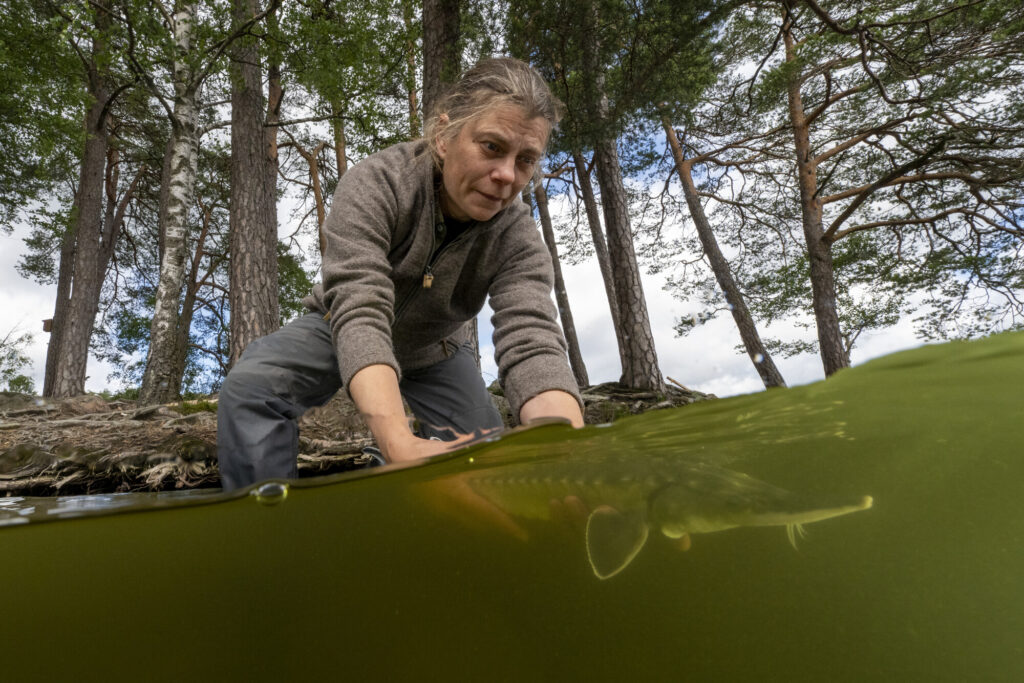
Such work forms part of a wider comeback for various sturgeon species underway across Europe. Captive breeding and release programmes are working to restore sturgeon populations in countries including Germany, Sweden, France, Estonia and Italy. In Sweden’s Göta River, for example, support from Rewilding Europe’s European Wildlife Comeback Fund saw Atlantic sturgeon releases begin in 2024, with further releases taking place in 2025.
A legacy for future generations
Restoring populations of Atlantic sturgeon demands patience. The fish spend much of their lives in marine and coastal waters before returning to freshwater to reproduce, and females may take around two decades to reach maturity. The juveniles released into the Ina may not return to spawn for another 15 to 20 years.
“The children standing on the banks of the Ina on that day will then have their own sons and daughters,” says Dr. Jan Krzystolik. “The release of sturgeon now is not just a commitment to the river, but also to the next generation.”
If sturgeon eventually return from the Baltic and once again spawn naturally in the Ina and other rivers across the Oder Delta, their journey will tell a much bigger story: of barriers removed, habitats reconnected, and once choked and degraded waterways flowing and functioning naturally. Rivers where fish can migrate freely and wildlife can flourish are also rivers that provide cleaner water, greater resilience to floods, drought and climate change, and richer places for people to fish, explore and enjoy. The return of this extraordinary river giant could become a powerful symbol of a wilder, healthier Oder Delta — for nature and people alike.