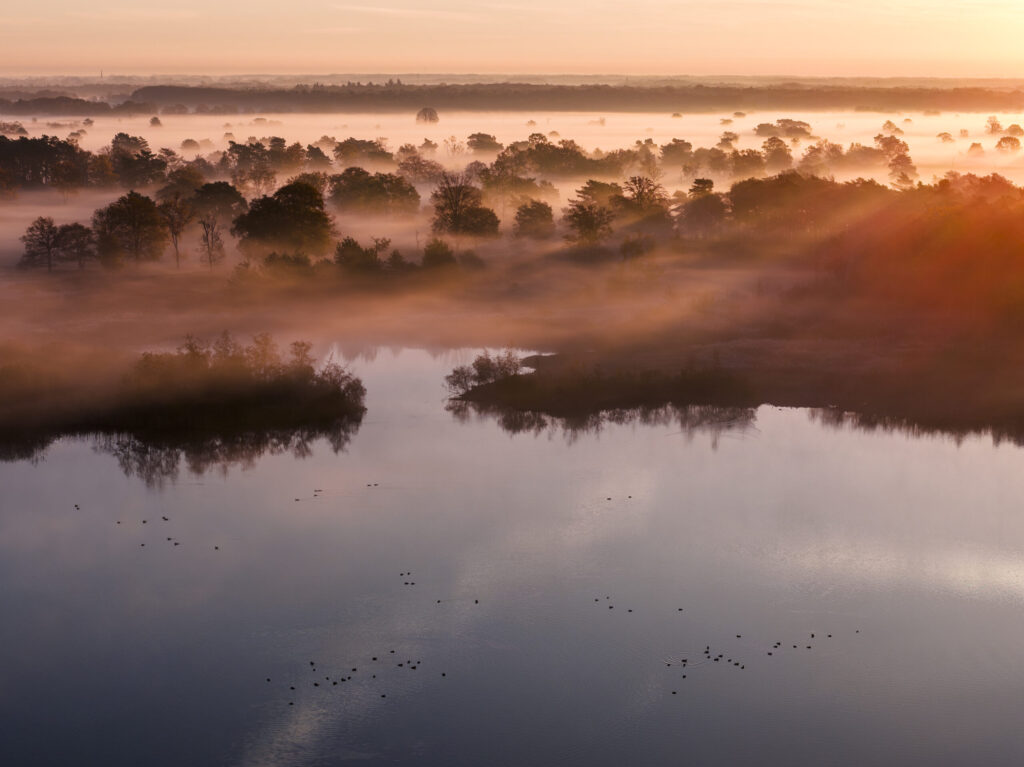

Working with nature is one of our greatest opportunities to build a more resilient and prosperous Europe. As climate change fuels more frequent and intense wildfires, floods and droughts, rewilding can help future-proof landscapes for the challenges ahead.

From firefighting to future-proofing
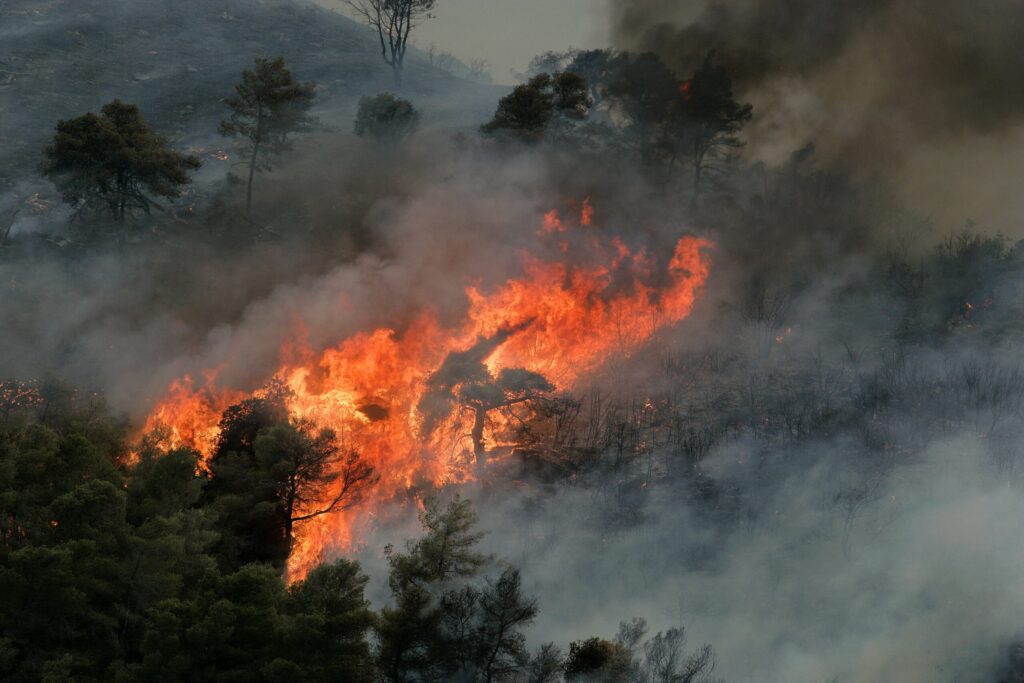
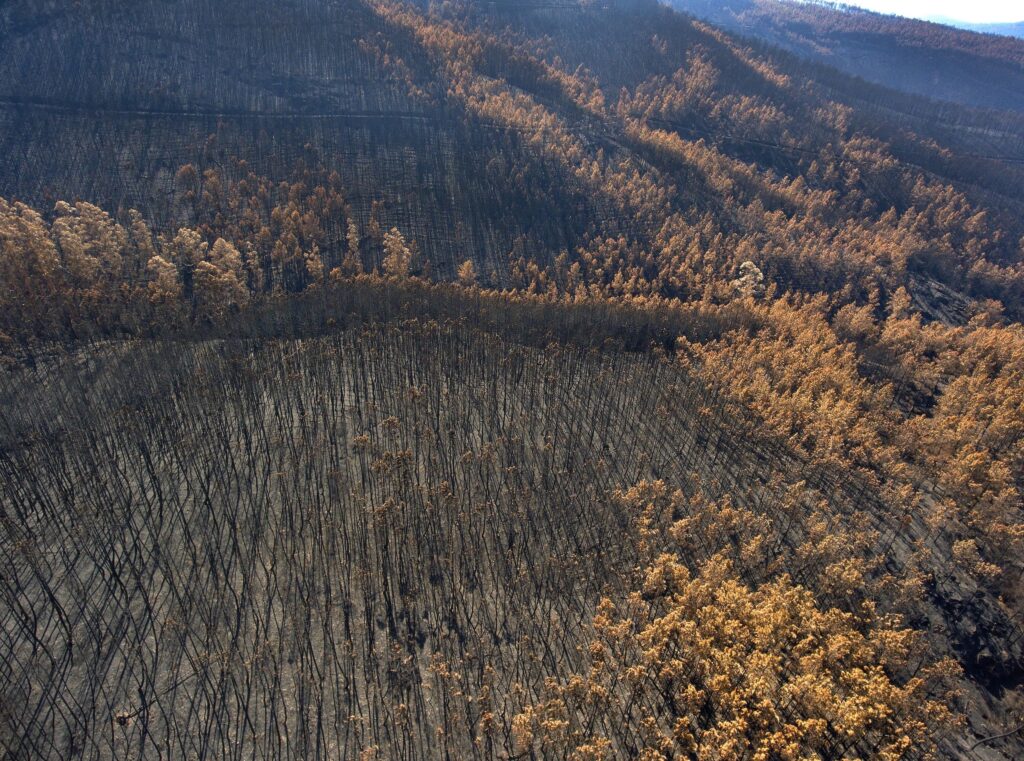
Europe is entering a new era of climate extremes. This summer, devastating wildfires have swept across Spain, Portugal, France, Greece and other countries, while major blazes have also erupted in places once considered far less vulnerable, including Scotland and Ireland. More than 600,000 hectares have already burned across the European Union this year, with climate change making the extreme weather behind many of these events significantly more likely. This follows a catastrophic year for European wildfires in 2025.
The human and economic costs are also spiralling. The economic impact of extreme wildfires in France, Spain and Greece alone this summer has been estimated to exceed €15 billion. Effective firefighting and emergency response will always be essential, but spending ever-increasing sums on fire suppression and dealing with the fallout of climate-related disasters after they strike is neither sustainable nor smart. As these events become more frequent and severe, one thing is clear: Europe must invest far more in transforming landscapes and land use, creating healthier, more resilient ecosystems that can reduce the risk and impact of future disasters.
Rewilding has a critical role to play in this shift. By restoring natural processes and enabling ecosystems to function more effectively, it can create healthier, self-sustaining landscapes that are better equipped for the future. Three approaches are particularly important: rewetting wetlands and restoring natural water systems; enhancing natural grazing and wildlife comeback; and transforming simplified forests into more diverse, resilient ecosystems. Together, these measures can reduce wildfire risk and impact, while helping landscapes better withstand floods, droughts and other climate-related pressures. This makes rewilding a practical, proactive and cost-effective investment in climate resilience.
Restoring water tables and wetlands: bringing water back to the landscape
Water is one of nature’s greatest allies in building climate resilience. Centuries of drainage for agriculture, forestry and other land uses, combined with growing extraction for domestic and industrial use, have lowered groundwater tables and dried out soils across much of Europe. Reversing this means restoring the natural sponge function of landscapes wherever possible — removing or blocking drains, ditches and channels so that water is retained from uplands to lowlands, rather than rapidly flowing away.
Rewetting wetlands, floodplains and peatlands is an important part of this process, helping landscapes absorb rainfall, store water and release it gradually during dry periods. Restoring higher water tables also keeps soils and vegetation wetter, creating natural firebreaks and reducing vulnerability to wildfire, while slowing floodwaters, storing more carbon and supporting richer biodiversity.
In the Affric Highlands rewilding landscape in Scotland, the Rewilding Affric Highlands team has worked with local partners to restore more than 1,000 hectares of degraded peatland by blocking drainage channels and allowing water to return. Meanwhile, in the Oder Delta rewilding landscape, wetlands are being revitalised through a combination of active rewetting and the remarkable eco-engineering work of beavers. These initiatives show how restoring natural water systems and supporting the return of beavers as powerful climate allies can help landscapes become more resilient to multiple climate-related pressures.
Revitalising an essential natural process
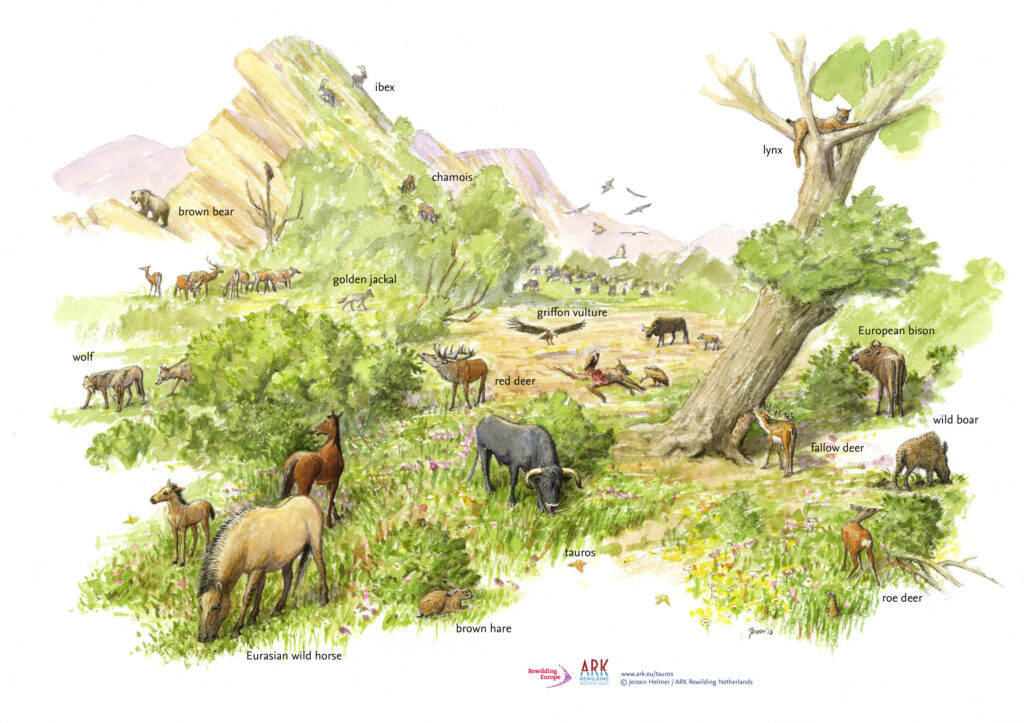
For thousands of years, Europe’s landscapes were shaped by large herds of wild herbivores. Grazing, browsing and trampling created a constantly shifting mosaic of grassland, scrub and woodland that supported rich biodiversity, while limiting the build-up of vegetation that could fuel large, intense fires. Today, human impacts mean most of these natural grazers have disappeared, while rural depopulation and land abandonment have contributed to declining livestock numbers. With fewer animals grazing the land, dense vegetation has accumulated across millions of hectares, increasing the fuel available for wildfires.
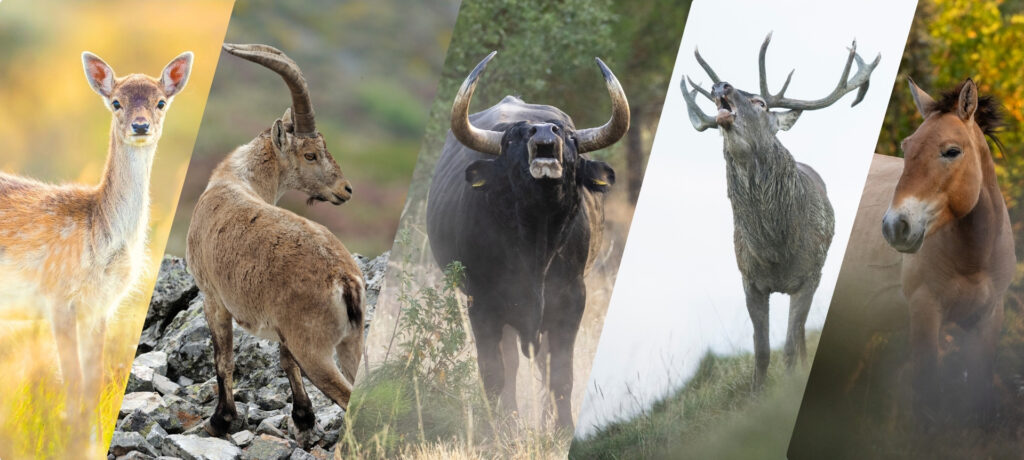
Restoring natural grazing is not only about bringing back large herbivores such as European bison, wild horses and Tauros. It also means allowing common species such as red, roe and fallow deer, elk and ibex to recover to densities where their grazing and browsing can significantly shape vegetation. Across much of Europe, intensive hunting and forestry practices have suppressed herbivore populations, limiting this important ecological role. Restoring more abundant and diverse herbivore communities can reduce the build-up and continuity of combustible vegetation, creating more varied landscapes that can slow the spread and intensity of wildfire.
Grazing for greater resilience: from theory to practice
A growing body of scientific evidence highlights the role free-roaming herbivores can play in reducing wildfire risk. A global review published in the Journal of Applied Ecology — drawing on 74 ecological studies from around the world — concluded that restoring natural grazing is one of the most cost-effective nature-based solutions for reducing the incidence and severity of catastrophic wildfires, particularly where different herbivore species graze and browse together.
Across Rewilding Europe’s Greater Côa Valley and Iberian Highlands rewilding landscapes, growing populations of free-roaming herbivores such as Sorraia horses, Przewalski’s horses, Tauros, Iberian ibex, red deer, roe deer and fallow deer are helping create more heterogeneous, fire-resilient landscapes. Their grazing and browsing is restoring natural processes while delivering wider benefits for people and nature. Richer wildlife attracts visitors, strengthens nature-based businesses and creates new economic opportunities for rural communities, demonstrating how investing in nature can also strengthen local livelihoods.
Building stronger, healthier forests
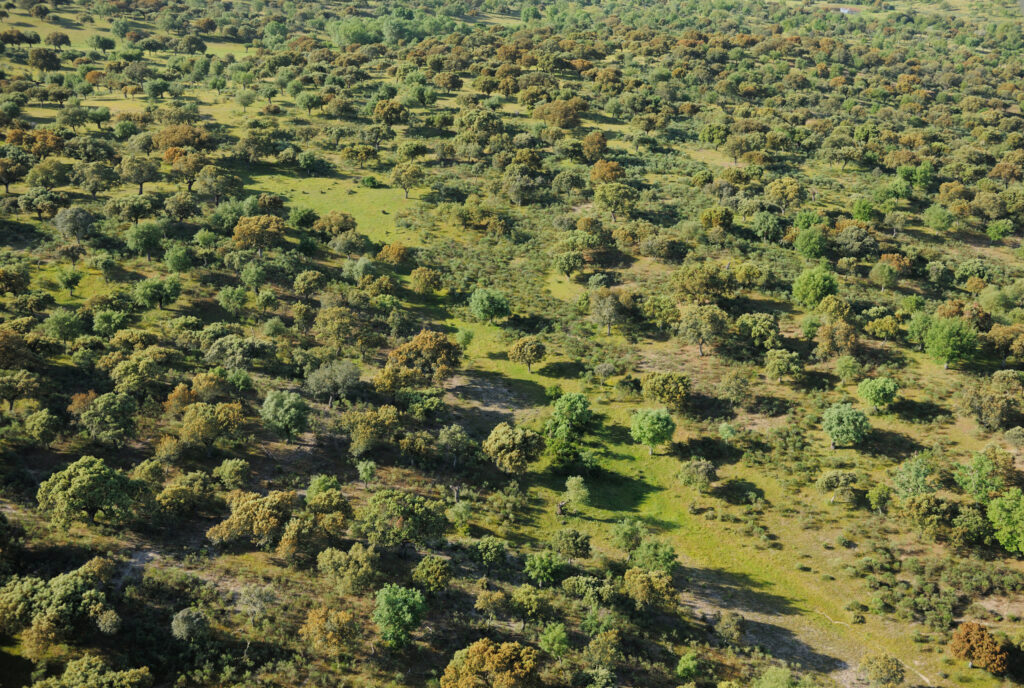
Europe’s forests are another critical part of the climate resilience puzzle. Across large areas of the continent, diverse native woodland has been replaced by dense commercial plantations, often dominated by highly flammable non-native species such as eucalyptus and Monterey pine. These simplified forests, which also tend to be far less biodiverse, can become especially vulnerable during prolonged droughts and extreme heat, allowing wildfires to spread rapidly through continuous stands of uniform vegetation.
Europe’s forest cover has increased significantly over the last century, driven by commercial forestry and natural regeneration following land abandonment, yet less than 3% of European forests are considered natural. Allowing forests to recover more of their natural diversity and complexity can significantly improve their resilience. Research analysing more than 26,000 wildfires in Spain found that native broadleaf woodland had the lowest ignition risk and was less prone to intense fires — even during extreme fire weather. Diverse, mixed forests are also generally better able to withstand drought, storms, pests and disease, making forest regeneration increasingly important as Europe’s climate warms.
Rethinking forest management
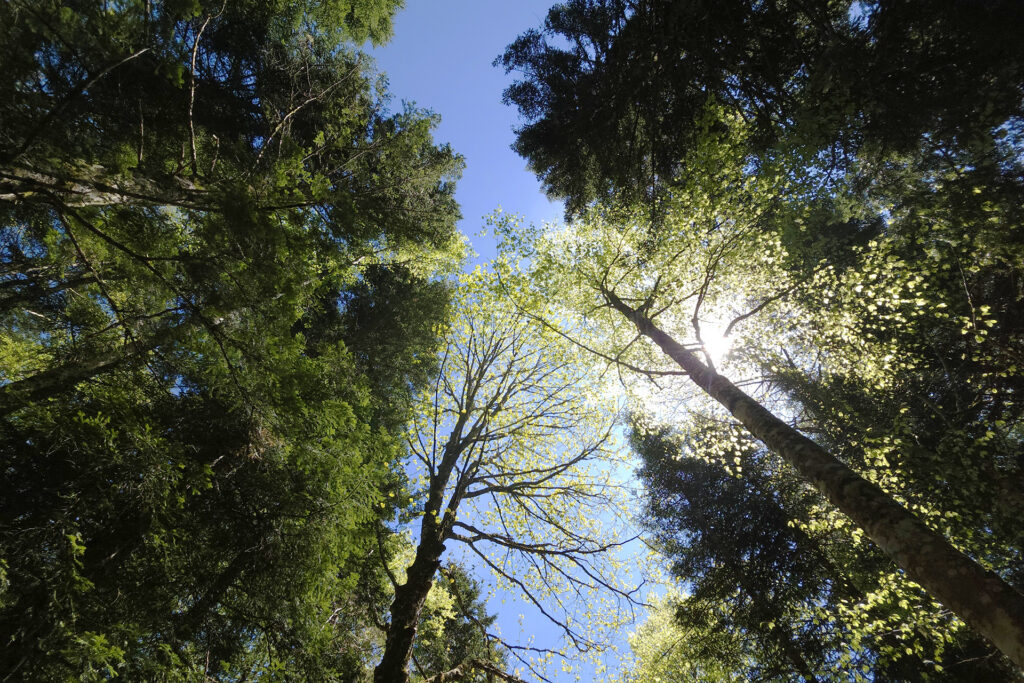
Across Europe, forest managers are increasingly embracing Closer-to-Nature Forest Management, recognising the wide-ranging benefits that diverse, mixed forests deliver. Supported by the EU Biodiversity Strategy for 2030 and EU Forest Strategy for 2030, this shift is gradually helping move production forestry towards a more resilient future, although challenges remain.
This transition is already being supported across many of Rewilding Europe’s landscapes. In the Dauphiné Alps in France, the Rewilding France team and local partners have secured a groundbreaking agreement to let nature lead recovery in Die Forest for at least 60 years, creating healthier, more diverse woodland that is better able to withstand wildfire and drought. In Bulgaria’s Rhodope Mountains, forest regeneration is transforming former production forests into thriving native woodland, benefiting wildlife and building resilience for generations to come.
Investing in landscapes of the future
Faced with growing wildfire risk, there can be a temptation to recreate landscapes of the past through subsidised livestock grazing, vegetation clearance, large firebreaks and other intensive management. Such measures can still have an important role locally, but Europe’s landscapes, climate and rural societies have changed. Attempting to maintain nature everywhere through continuous human intervention would also be hugely expensive: a European Commission study estimated the annual cost of managing the EU’s Natura 2000 network at €5.8 billion, with subsequent analysis suggesting that only a fraction of the necessary financing is currently available.
Europe undoubtedly needs to invest far more in nature recovery. But it also needs approaches that make that investment go further. Rewilding can help by restoring natural processes — from grazing and browsing to forest regeneration and natural hydrology — so that ecosystems increasingly sustain themselves with less dependence on continuous management and subsidies. Rather than trying to recreate landscapes of the past, we now have an opportunity to create resilient landscapes for the future.
Scaling up natural resilience is essential
With Europe warming faster than any other continent, restoring natural processes to boost climate resilience is becoming increasingly urgent. Without a transformation in land use, as well as better wildfire management, scientists project that the area of Europe burned by wildfires could increase by almost 40% by the end of this century, even under the most optimistic climate scenarios.
Rewilding is not a replacement for firefighters, aircraft, early-warning systems or other measures that protect people and property. But with the costs of suppression and recovery escalating, responding after disaster strikes cannot be the only strategy. Wildfire experts have long warned against the “firefighting trap” — an over-reliance on suppression at the expense of longer-term prevention. Research from the World Bank and European Commission estimates that every euro invested in wildfire prevention can save between four and seven euros in damage, yet spending in Europe still leans heavily towards detection and response. Rewilding can help redress this balance, creating landscapes that are better able to cope with wildfire, flooding, drought and other climate-related pressures.
As EU Member States prepare their National Restoration Plans under the Nature Restoration Law, there is now a major opportunity to put this approach into practice. With the European Commission proposing that 35% of the EU’s next budget should support climate and environmental measures — and placing greater scrutiny on wildfire prevention in restoration plans — there is growing momentum behind this shift. By scaling up rewilding and putting nature recovery at the heart of climate resilience, Europe can reduce the impacts and costs of future disasters while creating healthier landscapes that deliver more for nature and people.