

Supported by a loan from Rewilding Europe Capital, Dutch start-up Oyster Heaven is demonstrating that large-scale oyster reef restoration is possible. With Europe’s largest restored oyster reef now established, the company is showing how innovation and entrepreneurship can help revive one of the continent’s most valuable marine ecosystems.

Rebuilding a lost ecosystem
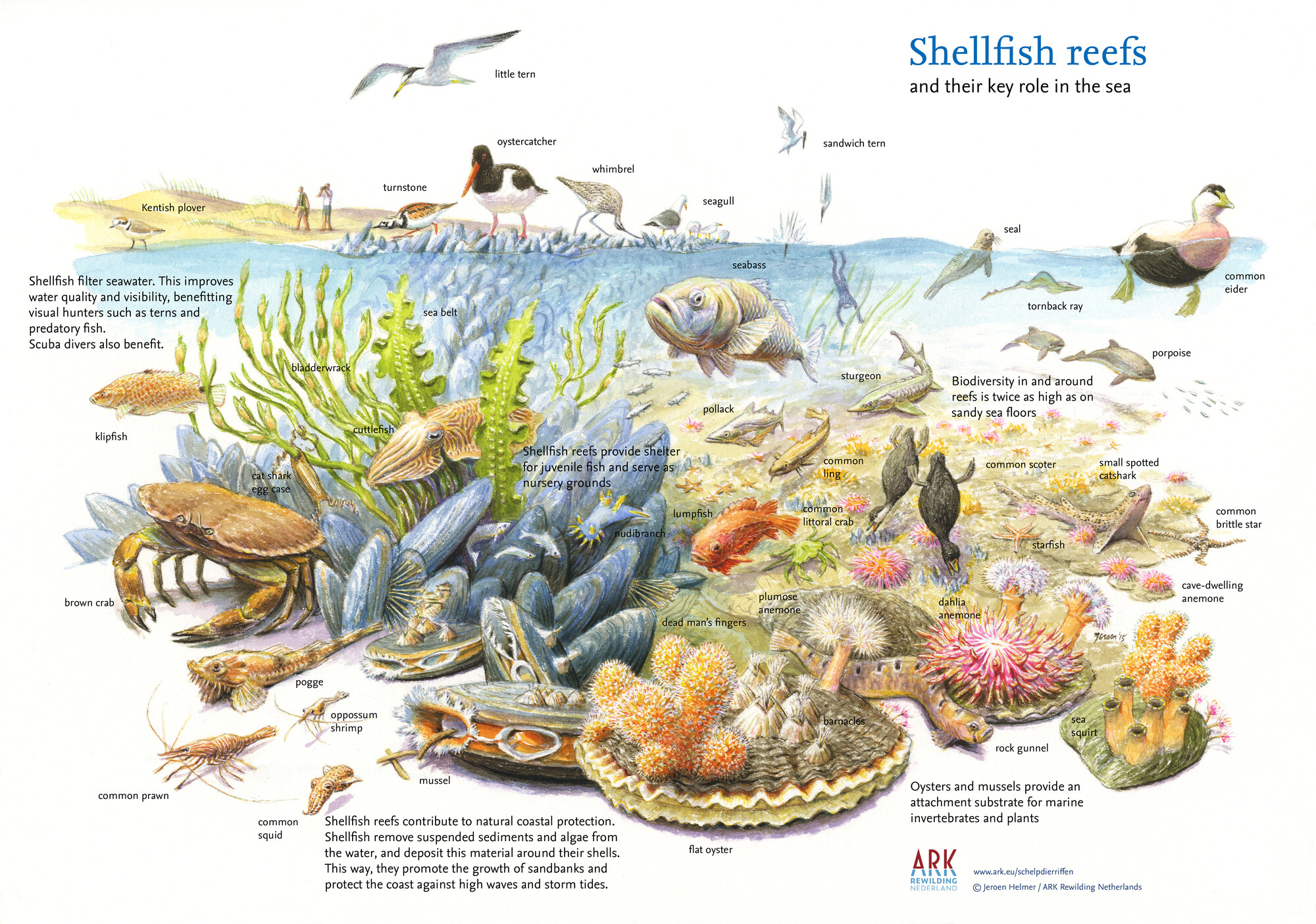
Once widespread across Europe’s coastal waters, native European flat oysters (Ostrea edulis) formed vast reefs that filtered seawater, provided habitat for hundreds of marine species, stabilised seabeds, and helped protect coastlines from erosion. But centuries of overharvesting, pollution, disease, and habitat destruction have reduced these reefs to a tiny fraction of their former extent, leaving today’s coastal ecosystems significantly less healthy and resilient.
Founded in the Netherlands in 2021, Oyster Heaven was created to reverse this decline. The company’s mission is to make oyster reef restoration commercially viable at scale, combining ecological restoration with innovative engineering and finance.
“Oysters are ecosystem engineers,” explain Oyster Heaven founder George Birch. “When you restore an oyster reef, you’re not simply bringing back one species — you’re rebuilding the foundation that hundreds of other species depend on. By focusing on oysters, we can trigger a cascade of benefits, from richer biodiversity and cleaner water to more resilient coastlines and healthier fisheries.”
Critical funding
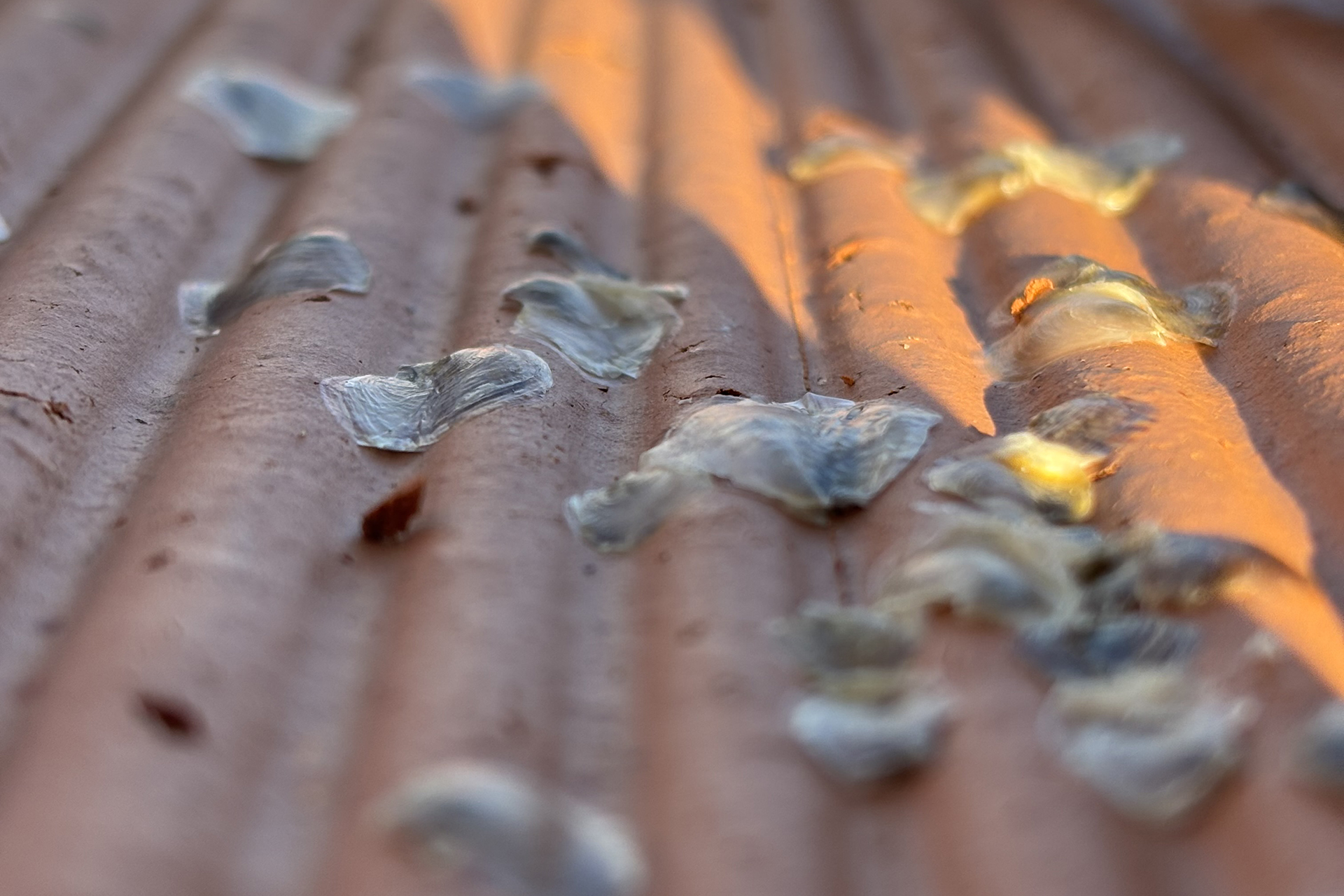
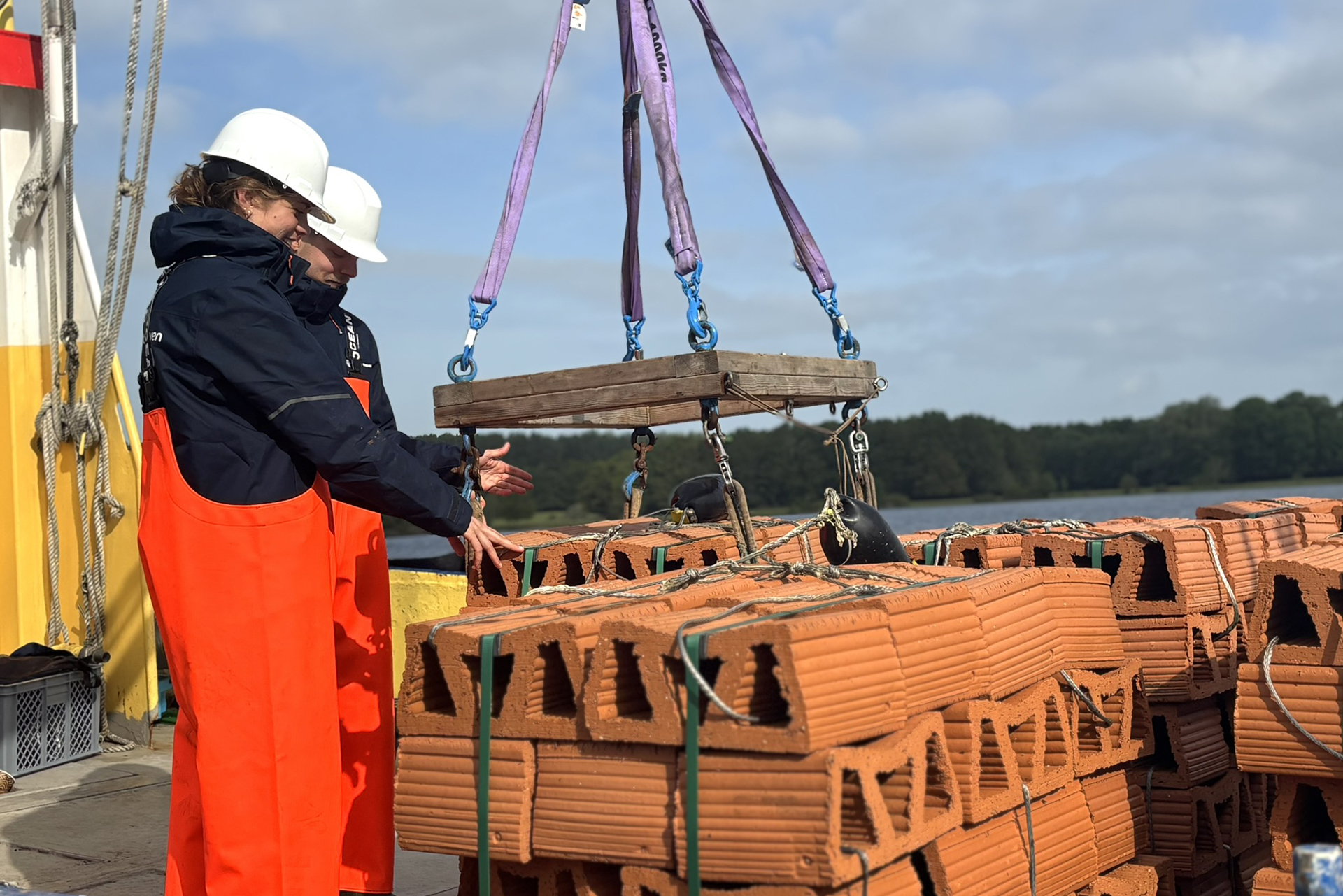
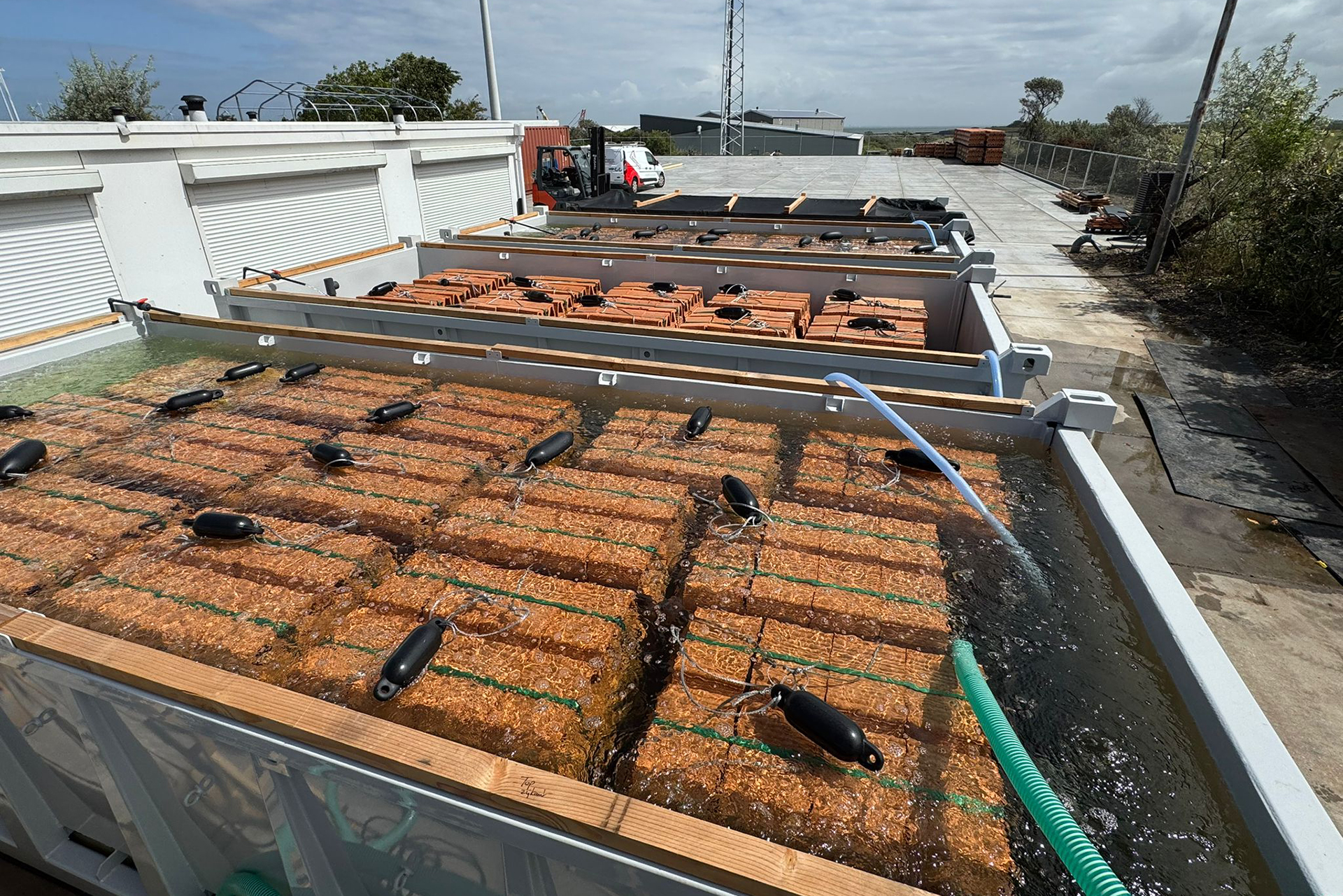
Central to Oyster Heaven’s approach is the patented “Mother Reef” system — modular clay structures that are seeded with juvenile oysters before being deployed on the seabed, where they provide the foundation for reefs to develop naturally into self-sustaining ecosystems. Alongside this, Oyster Heaven has developed mobile nurseries and efficient deployment techniques designed to reduce costs and make restoration easier to replicate across Europe.
In 2024, Rewilding Europe Capital — Rewilding Europe’s enterprise loan facility — helped accelerate Oyster Heaven’s mission with a 100,000-euro loan, enabling the company to bridge the gap between successful pilot projects and commercial-scale restoration. The investment supported the company’s next stage of growth, helping it launch ambitious restoration projects while demonstrating how innovative businesses can generate lasting benefits for both nature and society.
Europe’s largest oyster reef takes shape
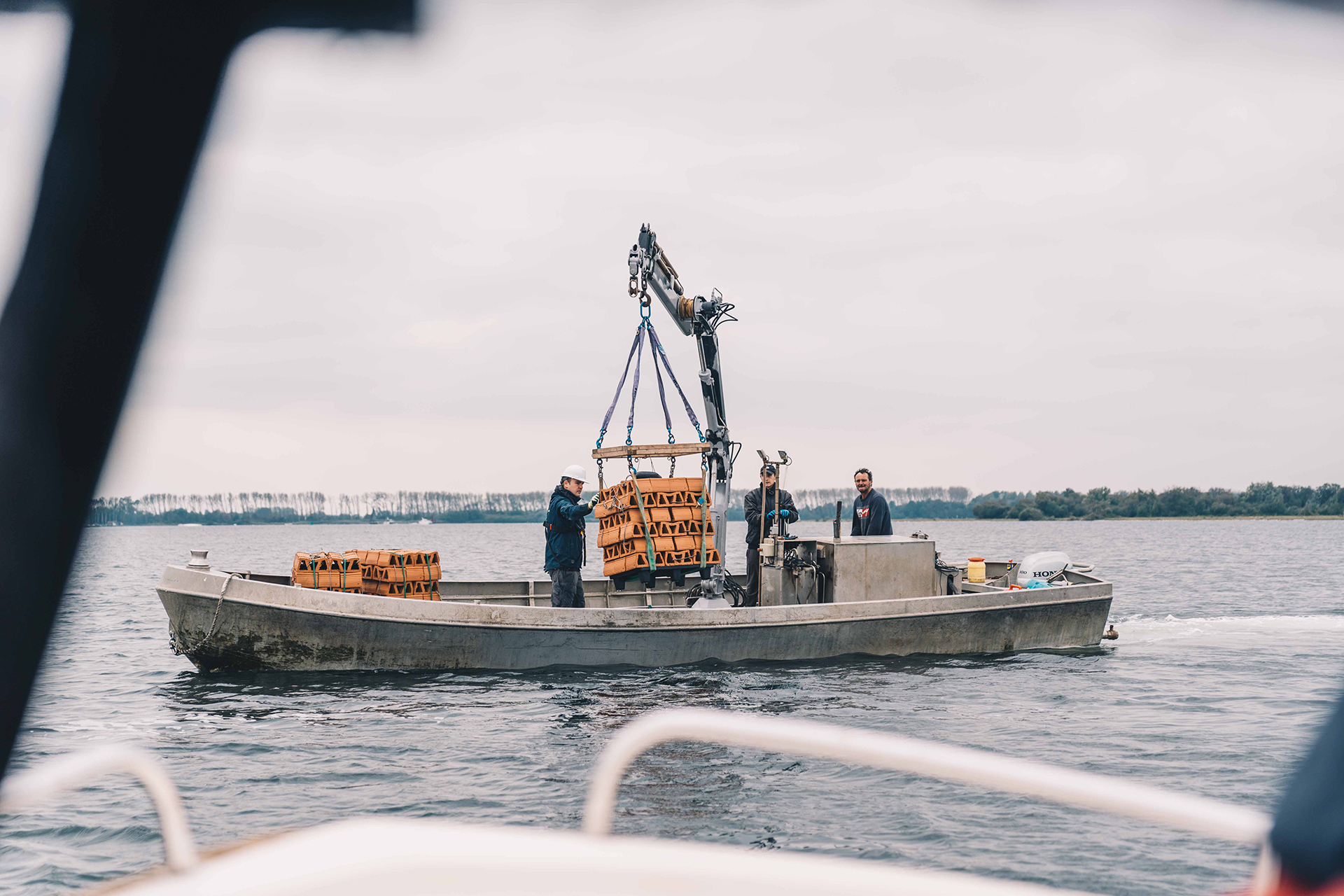
The clearest demonstration of Oyster Heaven’s progress is Project Asta, located in the Veerse Meer lagoon in the Netherlands. Designed to establish a self-sustaining population of native European flat oysters, it has become the largest oyster reef restoration project ever undertaken in Europe, bringing together industry, government and scientific partners around a shared vision of marine ecosystem recovery.
During 2025, Oyster Heaven installed its Mother Reef structures in the Verse Meer after seeding them with 3.8 million juvenile oysters raised in the company’s mobile nurseries. This work has seen highly encouraging results, with survival rates of around 45 percent after the first growing season — higher than typically reported for comparable restoration efforts, and an important step towards establishing a naturally reproducing oyster population.
Thriving marine biodiversity
Nature has responded quickly. Monitoring suggests that around 17 million marine organisms are already living in and around the developing reef, while species richness has increased dramatically compared to nearby control sites. The three-dimensional reef structures are already providing habitat for fish, crustaceans, sponges, and many other marine species, illustrating how rapidly biodiversity can begin to recover when lost habitat is restored.
“Although we’re only seeing results from the first restoration season, they’ve already exceeded our expectations,” says George Birch. “The oysters aren’t just surviving — they’re creating a functioning reef ecosystem. Seeing biodiversity return so quickly gives us real confidence that large-scale oyster reef restoration can help transform Europe’s coastal seas.”

Building a business around restoration
While ecological restoration is its primary goal, Oyster Heaven is equally focused on demonstrating that restoring marine ecosystems can become financially sustainable. Rather than depending indefinitely on grants, the company is developing a business model based on the measurable benefits that healthy oyster reefs provide, helping position nature restoration as a long-term investment, rather than a one-off conservation project. This investability will underpin scalability.
One of the most promising opportunities lies in nutrient removal. Oysters naturally filter large volumes of seawater, removing excess nutrients such as nitrogen that contribute to declining water quality. As monitoring continues to quantify these benefits, Oyster Heaven aims to generate revenue through mechanisms such as commercial partnerships with organisations seeking to invest in nature recovery.
The company also works closely with local fishers, vessel operators, researchers, and coastal businesses, ensuring that restoration delivers economic benefits as well as ecological ones. With Project Asta now established, Oyster Heaven is already expanding its activities through initiatives in the United Kingdom, Belgium and elsewhere, adapting its restoration model to different marine environments while continuing to refine its methods.

From proof of concept to scaling up
Project Asta is still in its early stages, but it has already demonstrated that oyster reef restoration can be delivered at a scale that would have seemed unrealistic only a few years ago. Oyster Heaven’s focus is now shifting from proving that the approach works to improving efficiency, reducing costs, and refining techniques that can be replicated across many more restoration sites. Long-term monitoring remains central to this process, with scientists tracking reef development, biodiversity, fish populations, water quality, and nutrient cycling to build one of Europe’s most comprehensive datasets on oyster reef recovery.
The insights gained through Project Asta are already helping to shape the company’s next generation of restoration work. New initiatives — including Project Luna off the UK’s Norfolk coast — will adapt the approach to different marine environments, while partnerships across Europe and beyond continue to expand Oyster Heaven’s restoration portfolio and bring large-scale oyster reef recovery to new coastlines.
“Our long-term vision is to make oyster reef restoration a standard part of how Europe manages and rebuilds its coastal natural infrastructure,” says George Birch. “These reefs should become as routine an investment as coastal defences or water treatment because they deliver lasting ecological and economic value.”
A new frontier for rewilding
Healthy seas are just as important as healthy landscapes, yet many of Europe’s marine ecosystems have been degraded by decades of human pressure. Recognising this, Rewilding Europe is expanding its work into coastal and marine rewilding, restoring the natural processes and habitats that underpin healthy, resilient seascapes. Supporting pioneering enterprises such as Oyster Heaven through Rewilding Europe Capital is an important part of this ambition, helping to develop practical, scalable solutions that can accelerate marine ecosystem recovery.
Restoring oyster reefs sits alongside other coastal rewilding priorities, including the recovery of seagrass meadows, salt marshes, and coastal wetlands. Together, these habitats improve water quality, provide nursery grounds for fish, store carbon, reduce coastal erosion, and create thriving ecosystems that benefit both wildlife and coastal communities.
As Oyster Heaven continues to scale up its work, it offers a compelling example of how entrepreneurship, innovation, and nature restoration can reinforce one another. By backing businesses that restore natural processes while developing sustainable revenue models, Rewilding Europe is helping to show that large-scale coastal rewilding can deliver lasting benefits for biodiversity, climate resilience, and people.
Want to know more?
